
A video podcast can produce far more than one long episode. A strong conversation may contain expert answers, practical advice, stories, opinions and short explanations that can be edited into individual videos for LinkedIn, Instagram, YouTube and other channels.
There is no reliable formula that converts episode length into a fixed number of clips. A focused 30-minute interview may contain more useful short videos than an unfocused 90-minute conversation.
The result depends on the structure of the discussion, how independently each answer works, the available camera framing and the editing standard expected by the brand.
This guide explains how businesses can estimate the short-form potential of a video podcast and plan the production so that each episode creates a useful content library rather than a collection of disconnected excerpts.
Short Answer
One business video podcast can often generate multiple strong short videos, but the number should not be promised from duration alone. Count complete, useful ideas rather than minutes.
A good clip needs a clear opening, enough context to stand alone and a conclusion that rewards the viewer. It is better to deliver fewer valuable clips than many fragments that make sense only inside the full episode.
What You Will Learn
- What makes a podcast segment suitable for a short video
- Why episode length does not determine clip quantity
- How to plan questions that produce standalone answers
- How camera framing affects vertical content
- Which types of clips businesses can create
- What to include in a podcast production brief and quotation
A Clip Is Not Simply a Short Excerpt
An excerpt is any piece removed from a longer recording. A useful short-form video is a complete editorial unit.
It should give a viewer enough information to understand:
- What subject is being discussed
- Why the point matters
- What the speaker believes or recommends
- Where the idea concludes
A dramatic sentence without context may attract attention but create confusion. A long answer may be intelligent but unsuitable for a short video unless it can be edited into a clear structure.
The strongest clips feel complete even when the viewer has never seen the podcast.
Why Episode Length Is a Weak Predictor
Longer episodes create more footage, but not automatically more publishable ideas.
Clip potential is affected by:
- How focused the subject is
- How clearly the guest answers
- Whether questions explore distinct topics
- How much repetition appears in the conversation
- Whether each answer includes enough context
- Whether the brand has a clear editorial position
A guest who gives concise, specific examples may create several usable moments in a short session. A guest who repeats broad statements may provide very few, even after an hour of recording.
Count Ideas, Not Minutes
A practical planning method is to identify the number of distinct questions or ideas that could become independent posts.
For example, one episode may contain:
- A clear industry prediction
- A common client mistake
- A three-step process
- A personal leadership story
- A response to a frequent question
- A concise explanation of a technical term
Each may become a separate video if the answer is complete and relevant to the audience.
Do not divide every answer into as many pieces as possible. The production goal is a useful content series, not the maximum file count.
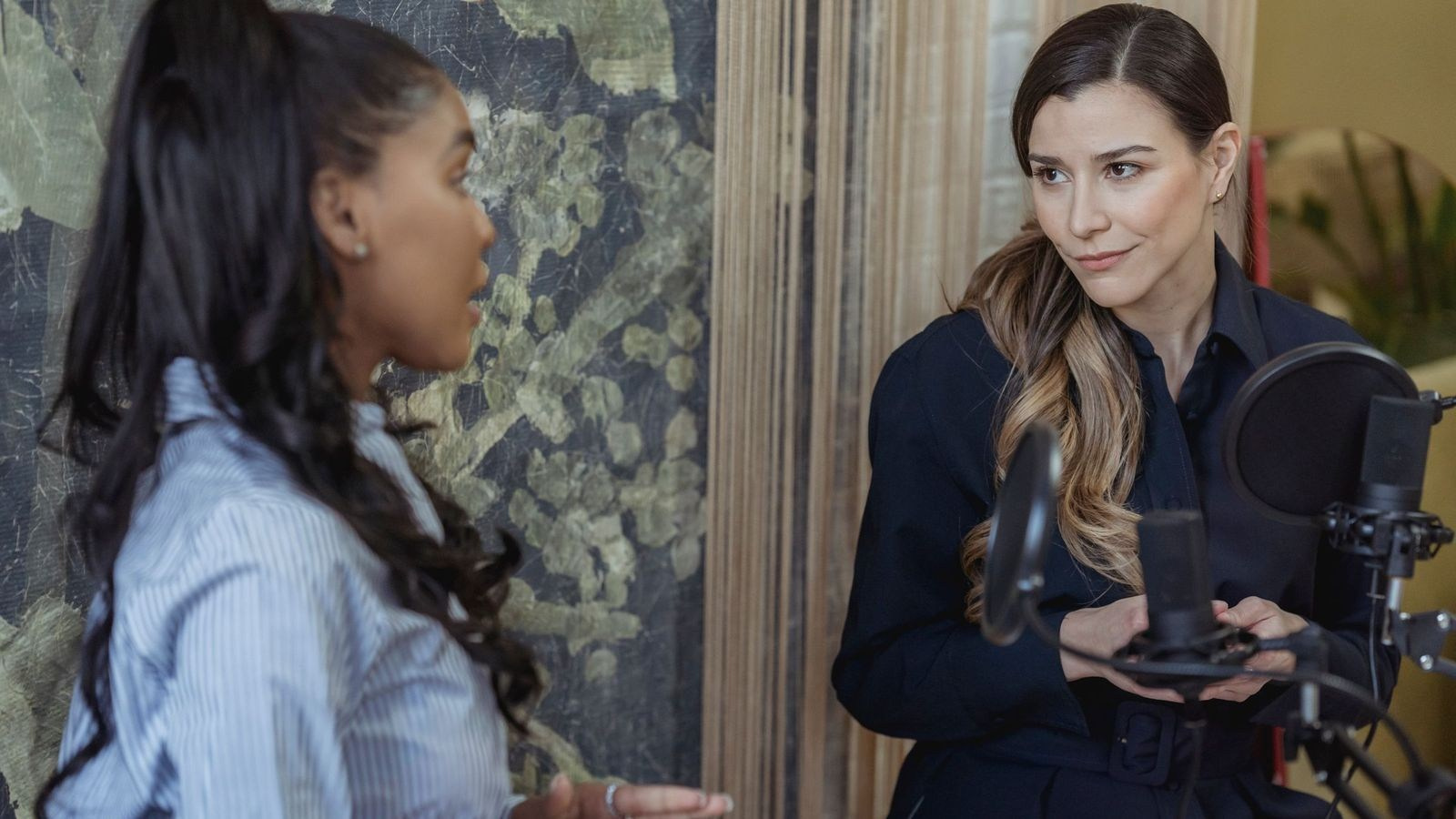
Plan Short-Form Content Before Recording
The best time to improve clip quantity and quality is before the cameras start.
The episode brief should define:
- The target audience
- The main business objective
- The complete episode topic
- The most valuable short-form themes
- Priority platforms
- Brand tone
- Approval requirements
- Desired calls to action
This does not mean scripting every answer. It means choosing questions that help the guest express useful ideas clearly.
Questions That Create Better Clips
Broad questions often produce broad answers. Specific prompts usually create stronger short-form content.
Instead of asking, “Tell us about your industry, ” consider questions such as:
- What is the most expensive mistake companies make in this area?
- Which assumption do clients often get wrong?
- What should a business prepare before starting?
- How would you explain this decision to a first-time buyer?
- What has changed most in the UAE market?
- Which three factors should a decision-maker compare?
The host should still ask follow-up questions. The objective is a natural conversation with clear editorial direction, not a sequence of rehearsed advertising statements.
Help the Guest Provide Standalone Context
A short video may begin in the middle of the complete episode. The viewer will not hear the host’s earlier introduction.
Answers are easier to repurpose when the guest includes the subject in the response.
For example, “The first thing a company should check before choosing a live streaming supplier is…” works better independently than “The first thing is…”
The host can encourage complete answers without making the conversation sound unnatural. A brief pause before the guest responds also gives the editor a cleaner starting point.
Types of Short Videos From a Podcast
Practical Answer
A direct response to a common client or industry question.
Expert Insight
A concise explanation that demonstrates specialist knowledge.
Personal Story
A short experience with a clear lesson or conclusion.
Myth or Misconception
A statement that corrects a common assumption and explains why it is wrong.
List or Framework
Several practical points presented in a memorable sequence.
Strong Opinion
A distinctive but well-supported position that invites discussion.
Episode Teaser
A short moment designed to lead viewers to the complete conversation.
A balanced content package usually includes more than one type. Repeating only dramatic statements may attract attention but fail to demonstrate the depth of the full discussion.
Horizontal and Vertical Framing
The complete podcast is commonly produced in a horizontal format, while many short videos are delivered vertically.
Vertical cropping works best when:
- Each participant has a dedicated camera
- The speaker is not framed too close to the edge
- Important gestures remain inside the vertical crop
- Microphones do not block the face
- Background branding remains readable
- Text and captions have enough safe space
A wide two-person shot may look excellent in the full episode but become difficult to crop vertically. Individual camera angles provide more flexibility.
The production team should know before recording that vertical content is required. Framing for social media is easier to protect on set than to repair later.
Camera Coverage and Editing Flexibility
A two-person podcast commonly benefits from individual angles for the host and guest, plus a wider shot.
Multiple angles help the editor:
- Remove pauses and repeated words
- Cover cuts naturally
- Show reactions
- Create visual changes during longer clips
- Select framing suitable for vertical output
More cameras do not automatically create more clips. They improve the visual and editorial options for ideas that are already valuable.
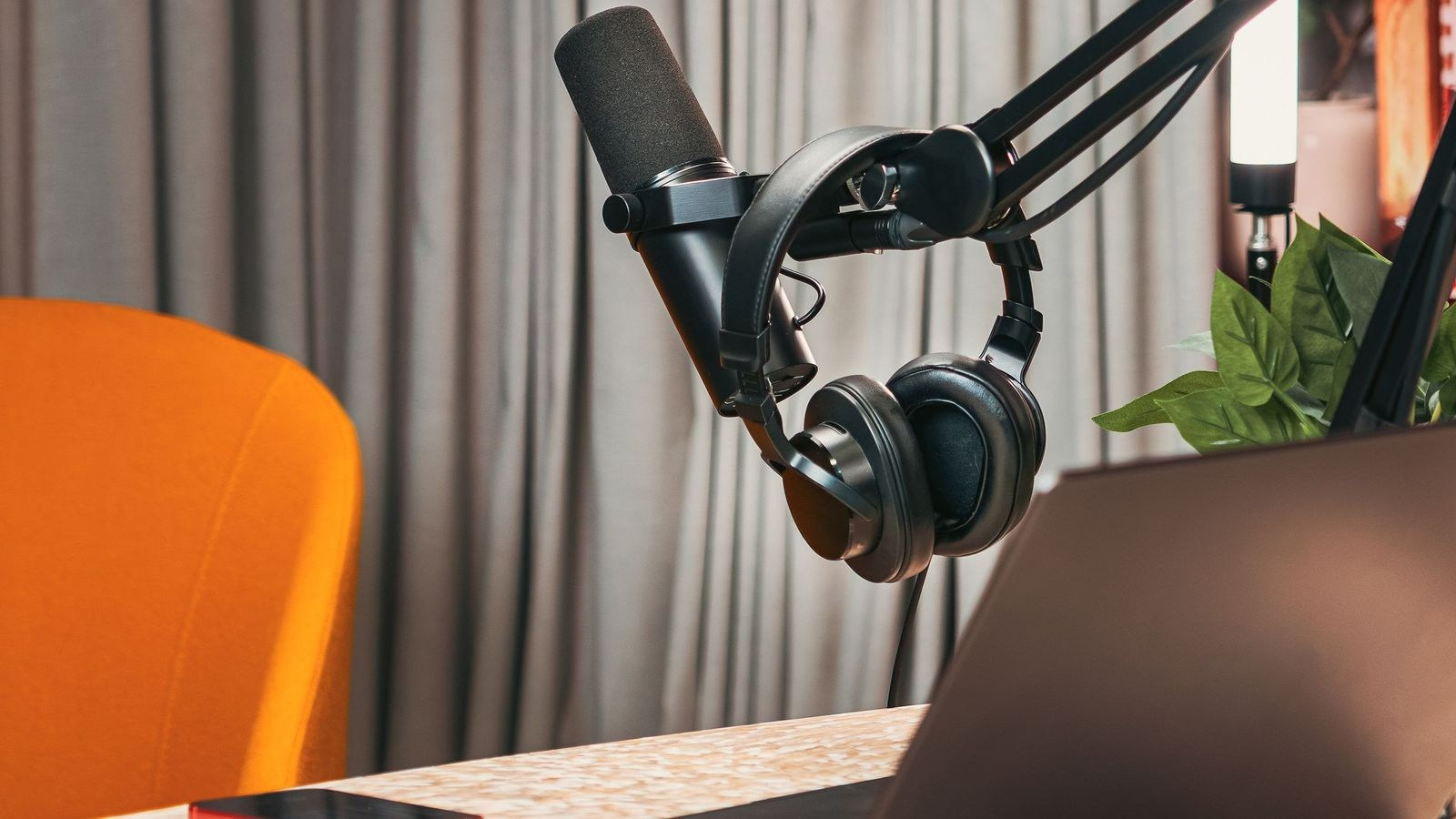
Audio Quality Still Determines Usability
A strong answer may be difficult to publish if it contains echo, clothing noise, interruptions or uneven microphone levels.
Each participant should normally be recorded on an individual audio channel. This allows the editor to balance voices and manage moments when people speak at the same time.
Air conditioning, traffic, meeting-room noise and hard reflective surfaces should be assessed before recording on location. Post-production can improve many issues, but it cannot perfectly reconstruct speech that was never recorded clearly.
Captions, Titles and Graphics
Many viewers encounter short-form content without sound. Captions can make the idea understandable immediately and support accessibility.
A clip package may include:
- Reviewed captions
- Speaker name and title
- A concise opening headline
- Brand colours and fonts
- Logo placement
- A closing call to action
Graphics should support the speaker rather than cover the frame. Long corporate titles and technical language need particular attention on small mobile screens.
Should Every Clip Have a Hook?
The opening should give the viewer a reason to continue, but it does not need to become exaggerated or misleading.
A useful opening may be:
- A clear problem
- A surprising but accurate observation
- A direct question
- A practical promise
- A concise conclusion presented first
B2B content depends on trust. Removing important qualifications to make a statement more dramatic can damage the speaker’s credibility and create approval problems.
Quality vs Quantity
Every additional clip creates work beyond the initial edit.
The process may include:
- Editorial selection
- Restructuring the answer
- Vertical reframing
- Audio cleaning
- Colour correction
- Captions
- Graphics
- Review and revisions
- Multiple exports
A quotation should define whether the production company selects the clips or the client provides timecodes. It should also specify how many versions, aspect ratios and revision rounds are included.
Publishing many weak clips can make a brand feel repetitive. A smaller set of distinct, well-edited ideas normally creates a stronger content calendar.
Plan a Content Mix
Short videos should serve different stages of the audience relationship.
A practical mix may include:
- Educational clips that answer questions
- Opinion clips that establish a point of view
- Story clips that make the speaker relatable
- Service-related clips that address buyer concerns
- Teasers that lead to the full episode
The complete episode provides depth. Short videos create entry points for people who do not yet know the programme.
Approvals for Corporate Podcast Clips
Corporate content may require approval from the guest, communications team, legal department or regional office.
Agree in advance:
- Who selects the clips
- Who can approve them
- How feedback is submitted
- Whether captions require separate review
- Which statements must remain in context
- Whether the guest can request removals
Consolidated feedback from one authorised contact prevents conflicting changes and keeps the release schedule predictable.
What Affects the Clip Production Scope?
The number of requested clips is only one factor.
The scope may also depend on:
- Episode duration and number of speakers
- Editorial selection by the production team
- Camera and audio quality
- Horizontal and vertical versions
- Caption style and review
- Graphics and animation
- Supporting footage or images
- Different calls to action
- Approval and revision rounds
- Delivery schedule
A clear quotation should describe the final content package rather than promising an undefined quantity of “social media content.”
A Practical Planning Method
- Define the audience and business objective.
- Select several distinct discussion themes.
- Prepare questions designed to produce complete answers.
- Tell the production team which platforms and formats are required.
- Record individual camera angles and clean audio.
- Select clips according to editorial value.
- Apply consistent captions and graphics.
- Use one approval process.
- Schedule clips around the full episode and wider campaign.
Common Mistakes
Promising a Fixed Number From Episode Length
Duration does not guarantee useful ideas. Review the content structure and expected editing standard.
Choosing Clips Only After Recording
Planning priority themes and questions in advance improves the chance of strong standalone answers.
Using Random Excerpts
A clip should have context and a conclusion, not simply begin and end at convenient timestamps.
Forgetting Vertical Framing
A horizontal wide shot may not crop well for mobile platforms. Protect individual framing during production.
Publishing Every Repetition
Several clips making the same point can reduce the impact of the campaign.
Overwriting the Speaker’s Meaning
Fast editing and dramatic headlines should not remove qualifications or create a misleading statement.
Ignoring the Approval Workflow
Unclear ownership and conflicting comments can delay an entire podcast series.
Questions to Ask a Production Company
- Will you help identify short-form themes before recording?
- Who selects the final clips?
- Are individual camera angles suitable for vertical cropping?
- Will each participant have separate audio?
- Are captions reviewed or generated automatically?
- Are speaker titles and branded graphics included?
- Which aspect ratios will be delivered?
- How many revision rounds are included?
- Can we request clips from specific timecodes?
- How will final files be organised?
- Can several episodes use one consistent visual system?
Frequently Asked Questions
How many clips should a business podcast produce?
There is no universal number. The right quantity depends on how many distinct, complete and relevant ideas the episode contains and the quality standard required.
How long should a podcast clip be?
It should be long enough to communicate one useful idea and short enough to remain focused. The subject and platform matter more than a single fixed duration.
Can horizontal podcast footage become vertical video?
Yes, especially when each speaker has an individual camera angle with enough space for cropping and captions.
Should the guest receive questions in advance?
Main themes and sensitive questions can be shared. Overly scripted answers may sound less natural, so the host should still allow follow-up discussion.
Can one clip be published on every platform?
Sometimes, but platform audiences, framing and text placement may differ. The same core edit may need adapted versions.
Should every clip promote the company?
No. Most clips should provide useful content. Calls to action can be included selectively where they follow naturally from the subject.
Can old podcast episodes be turned into clips?
Yes, if the footage, audio, permissions and subject remain suitable. Older camera framing may limit vertical crops.
Conclusion
A video podcast can generate a valuable short-form content library, but the result is determined by editorial quality rather than episode duration.
Plan distinct themes, ask focused questions and help speakers provide complete answers. Tell the production team which platforms and formats are required so that cameras, framing, audio and graphics support both the full episode and individual clips.
The best measurement is not how many files were delivered. It is how many clips communicate a useful idea, represent the speaker accurately and support the brand’s wider content strategy.
Planning a Business Video Podcast in the UAE?
GSP Media provides professional video podcast and interview production for businesses, executives and organisations in Dubai and across the UAE.
Our team can manage multi-camera recording, professional audio, lighting, episode editing and short-form content adapted for business social channels.
Blog
Ecommerce Fashion Photography vs Campaign Photography
Product Photography vs Product Videography: What Does Your Brand Need?
How to Prepare Clothing for an Ecommerce Fashion Photoshoot

White Background vs Lifestyle Product Photography
Ecommerce Fashion Photography: Model, Mannequin or Flat Lay?
How to Prepare Products for a Commercial Photoshoot

Corporate Podcast vs Video Interview: Which Format Is Right for Your Business?

How to Prepare a Corporate Event Photography and Video Brief

How to Prepare a Venue for Professional Live Streaming
How Multi-Camera Live Streaming Works
How Multi-Camera Video Podcast Production Works
How Many Cameras Does a Corporate Event Need?
How to Prepare a CEO or Executive for a Video Interview

Why Backup Internet Is Essential for Event Live Streaming
