
The cost of corporate event photography and videography cannot be calculated accurately from event duration alone.
Two events may both last six hours but require completely different production setups. One may take place in a single meeting room with one photographer. The other may involve several stages, executive interviews, live streaming, same-day content and multiple teams working simultaneously.
The final quotation is usually influenced by the event structure, required crew, technical complexity, deliverables and post-production workload.
This is why professional production companies normally request an agenda, venue details and content requirements before preparing a final proposal.
This guide explains the main factors that affect the cost of corporate event photography and videography in Dubai and across the UAE, what should be included in a quotation and how organisers can compare proposals accurately.
What You Will Learn
By the end of this guide, you will understand:
- Why event duration is only one pricing factor
- How crew size affects production costs
- What increases photography and videography complexity
- Why highlight videos and complete recordings are priced differently
- How same-day delivery changes the workflow
- When travel, venue access and equipment logistics matter
- What to check before comparing quotations
Event Duration
Coverage time is one of the most visible pricing factors, but it does not tell the full story.
A production company may calculate time based on:
- On-site coverage
- Setup
- Sound checks
- Technical rehearsals
- Breakdown
- Equipment loading
- Travel
- Post-production
The official event may run from 10:00 to 16:00, but the crew may need to arrive several hours earlier.
For photography, setup may be relatively limited unless lighting stations, executive portraits or group photographs are required.
For video, the team may need to position tripods, connect to the venue audio system, test microphones, balance cameras and verify presentation feeds before guests arrive.
A live-streamed event may require an even earlier technical setup.
When reviewing a quotation, confirm whether the stated production hours include setup and breakdown or refer only to the public event programme.
Number of Crew Members
Crew size is one of the most significant cost factors.
A small event may require one photographer. A larger event may need:
- Lead photographer
- Additional photographer
- Videographers
- Camera operators
- Audio technician
- Streaming engineer
- Production coordinator
- On-site editor
The correct number depends on the event structure rather than guest count alone.
A conference with 100 attendees and three simultaneous rooms may require more crew than a 500-person event taking place entirely in one ballroom.
Separate specialists are usually required when photography and continuous video coverage are both priorities. One operator cannot fully photograph an awards presentation while simultaneously maintaining uninterrupted video coverage from another position.
The quotation should explain who will attend and what each person will cover.
Number of Rooms and Simultaneous Sessions
Parallel activity increases production complexity quickly.
Examples include:
- Keynote sessions running alongside workshops
- Separate interview rooms
- Exhibition and conference areas operating at the same time
- VIP arrivals occurring during stage presentations
- Networking sessions outside the main hall
- Multiple branded activations
A photographer may move between nearby areas, but this creates gaps. If important sessions overlap, additional crew may be necessary.
Video coverage is less flexible because cameras may be connected to audio systems, presentation feeds or fixed recording positions.
The production company should review the complete agenda before recommending the team.
A proposal based only on event duration may underestimate the real scope if the programme includes simultaneous sessions.
Photography Requirements
Not all event photography assignments require the same workflow.
Standard documentary coverage may include speakers, audience reactions, networking, venue details and branding.
Additional requirements may increase the scope:
- Executive portraits
- Formal group photographs
- Step-and-repeat photography
- Instant photo delivery
- Dedicated sponsor coverage
- Product or exhibition photography
- Retouching of selected images
- On-site lighting setup
Executive portraits are a separate production task even when they take place during the same event. The team may need lighting, a fixed background, a dedicated area and a schedule for each participant.
Large group photographs also require planning. The photographer may need additional lighting, an elevated position and assistance arranging participants.
The quotation should distinguish standard event coverage from any controlled photography setup.
Video Deliverables
“Event videography” can refer to several very different products.
Possible deliverables include:
- Short event highlight
- Extended event film
- Complete keynote recording
- Panel discussion recording
- Executive interviews
- Guest testimonials
- Social media clips
- Same-day edit
- Presentation capture
- Live stream recording
Each deliverable requires a different filming and editing approach.
A highlight video is created from selected moments. The videographer records atmosphere, speakers, branding, reactions and transitions that can be edited into a concise story.
A complete presentation recording requires uninterrupted coverage, reliable audio and often a direct presentation feed.
The same camera may be used in both cases, but the operational requirements are different.
If the client needs a highlight, complete recordings and vertical social media clips, the quotation should account for all three workflows.
Number of Cameras
More cameras increase both the on-site production and post-production workload.
A simple interview may require two cameras. A conference stage may need:
- Wide stage camera
- Close-up speaker camera
- Audience camera
- Additional angle for panels
- Presentation feed
A single-camera recording may be sufficient for a controlled presentation, but it offers limited editing flexibility.
Multiple cameras allow the editor to change angles, remove pauses and cover moments when someone blocks one camera.
However, additional cameras require:
- Operators or monitored positions
- Tripods and support equipment
- More storage
- Additional batteries and media
- Synchronisation
- Colour matching
- Longer editing time
The objective is not to use as many cameras as possible. It is to use enough cameras to cover the programme reliably.
Audio Requirements
Audio is often underestimated when clients request event video.
Professional recording may require:
- Connection to the venue sound system
- Wireless microphones
- Separate audio recorder
- Backup recording
- Dedicated audio technician
- Individual microphone channels
- Audio for interviews
- Remote speaker integration
A venue may already provide microphones for the room, but this does not automatically mean the video team will receive a clean recording signal.
The production team may need to coordinate with the AV provider, test the feed and create a backup recording.
Complex panel discussions, audience questions and remote contributors require more audio planning than a single speaker at a lectern.
Audio requirements should be discussed before the quotation is finalised.
Editing Complexity
Post-production can require more time than the event itself.
Photography editing may include:
- Image selection
- Exposure correction
- Colour adjustment
- Cropping
- Noise reduction
- Exporting
- Retouching selected images
Video post-production may include:
- Organising and backing up footage
- Synchronising cameras and audio
- Selecting footage
- Editing
- Colour correction
- Audio cleaning
- Graphics
- Subtitles
- Music
- Revisions
- Multiple exports
A short final video does not necessarily mean a small editing workload.
A one-minute highlight may be created from many hours of footage. The editor still needs to review the material, identify the strongest moments and build a coherent sequence.
Editing requirements should be described by deliverable rather than simply by final video duration.
Graphics, Subtitles and Branding
Corporate videos often require branded post-production.
Possible additions include:
- Opening titles
- Speaker names
- Job titles
- Company logos
- Sponsor logos
- Presentation slides
- Animated graphics
- Subtitles
- Closing screens
- Calls to action
Simple name titles require less work than a complete branded graphics package.
Subtitles also affect the scope. Automatically generated captions still require review, especially when the content includes technical terms, company names or speakers with different accents.
If the video will be published in several languages, translation and subtitle versions should be included in the production brief.
Same-Day Content
Fast delivery usually requires a dedicated production workflow.
Same-day content may include:
- Edited photographs during the event
- Speaker images immediately after a session
- Short vertical video clips
- A same-day highlight
- Press-ready content
- Sponsor updates
A photographer cannot always cover the event continuously while also selecting, editing and exporting files.
A videographer cannot record every important moment while simultaneously editing a highlight.
Depending on the required volume and speed, the production may need:
- Additional photographer
- On-site photo editor
- On-site video editor
- Dedicated workstation
- Fast file transfer
- Approved graphics and music in advance
Same-day delivery should be requested before the event. Adding it after production begins may not be practical.
Venue and Access Requirements
Venue conditions can affect the equipment, setup time and crew requirements.
Important factors include:
- Loading access
- Parking
- Security procedures
- Accreditation
- Equipment restrictions
- Distance from loading area to ballroom
- Power availability
- Camera positions
- Audio access
- Internet access
- Working hours
Large hotels and exhibition venues may require advance registration of crew and equipment.
Some locations restrict tripods, lighting or camera movement in certain areas.
Outdoor venues may require weather protection, battery power and additional lighting.
A site visit may be recommended for complex events, especially when live streaming, stage recording or several production areas are involved.
Travel Across the UAE
Dubai is the main event market for many production companies, but corporate events also take place in Abu Dhabi, Sharjah, Ras Al Khaimah, Ajman, Fujairah, Al Ain and other locations across the UAE.
Travel may affect the quotation because of:
- Transportation
- Equipment logistics
- Crew travel time
- Early call times
- Overnight accommodation
- Remote venue access
- Additional production vehicles
An event outside Dubai does not necessarily require a significantly different production setup, but logistics should be discussed from the beginning.
For early morning events in another emirate, the crew may need to travel the previous evening or leave before normal working hours.
The quotation should clearly state whether travel and accommodation are included.
Equipment Requirements
Professional production normally includes standard cameras, lenses, audio and support equipment.
Additional equipment may be required for:
- Long-distance stage coverage
- Low-light venues
- Interviews
- Executive portraits
- Multi-camera recording
- Live streaming
- Presentation capture
- Large group photographs
- Outdoor events
- Drone filming
Specialist equipment can affect both rental and staffing.
For example, a long lens allows a camera operator to film speakers without blocking the audience. A teleprompter may be required for executive announcements. A dedicated lighting package may be needed for interviews away from the stage.
Equipment should follow the deliverables rather than being added simply to make the proposal appear more advanced.
Live Streaming and Hybrid Production
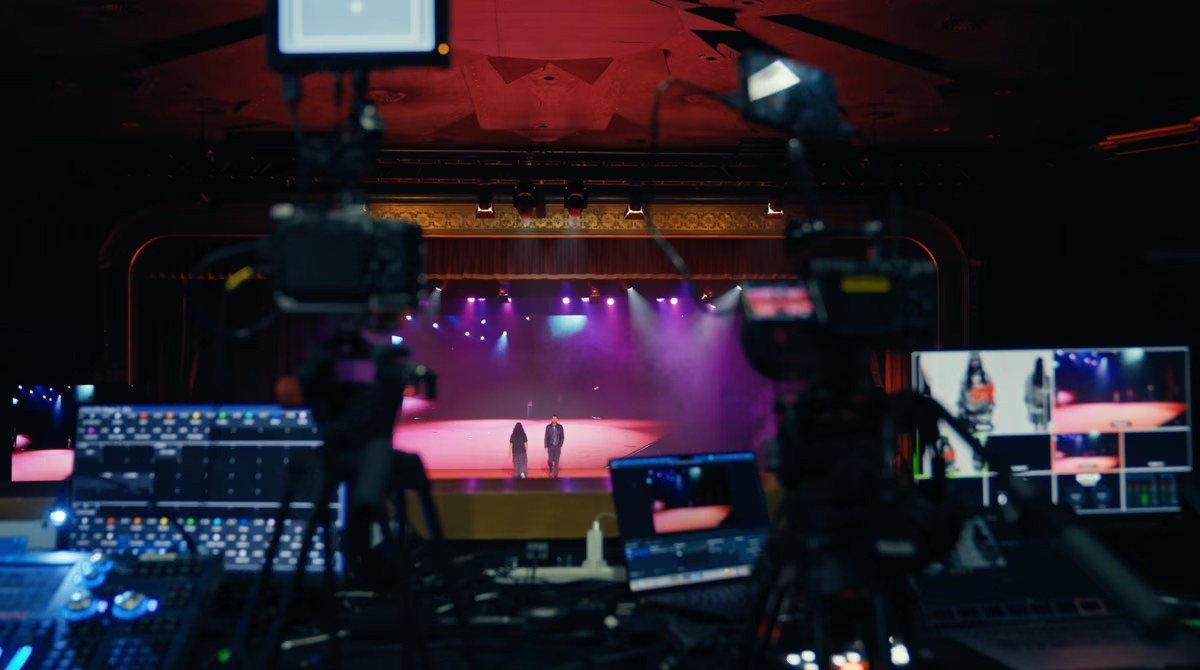
Live streaming introduces an additional technical workflow.
The scope may include:
- Multiple cameras
- Video switching
- Streaming encoder
- Internet testing
- Backup connectivity
- Graphics
- Presentation capture
- Remote speakers
- Platform management
- Local recording
- Technical rehearsal
A stream through a simple video meeting platform may require less infrastructure than a branded multi-camera broadcast.
The production company needs to know the audience size, privacy requirements, selected platform and whether remote participants will join.
Live streaming should be quoted separately from standard videography because it requires real-time operation and additional risk management.
Revisions
Revision terms affect the final production scope.
A quotation should state:
- Number of revision rounds
- How feedback should be submitted
- Which changes are included
- What counts as a new edit
- How long the client has to provide feedback
Consolidated feedback from one authorised person is usually the most efficient approach.
Conflicting comments from several departments can create additional editing work.
A revision normally covers reasonable changes to an existing edit. Rebuilding the video with a new structure, different concept or completely different music may fall outside the original scope.
Usage and Deliverable Formats
The production company should know how the content will be used.
Possible formats include:
- Horizontal website video
- Vertical social media clips
- Square posts
- High-resolution photography
- Web-optimised images
- Presentation recordings
- Internal archive files
- Press delivery
- Silent exhibition videos
Producing one horizontal edit is different from creating separate horizontal, vertical and square versions.
Vertical content may require different framing during the event, not simply a crop after editing.
The required formats should therefore be included in the brief before production.
What Should Be Included in a Professional Quotation?
A clear proposal should define:
- Event date and location
- Coverage hours
- Setup and breakdown
- Crew size
- Crew roles
- Equipment
- Photography deliverables
- Video deliverables
- Editing level
- Same-day content
- Delivery timeline
- Revision policy
- Overtime conditions
- Travel and accommodation
- Additional venue requirements
The proposal should make it possible to understand exactly what the organiser will receive.
A short quotation containing only “photography and videography for eight hours” does not provide enough information for an accurate comparison.
Why the Lowest Quotation Is Not Always the Cheapest Option
A lower price may reflect a genuinely more efficient solution. It may also mean the proposal includes fewer deliverables or less production protection.
Possible differences include:
- Smaller crew
- Fewer cameras
- Limited editing
- No backup equipment
- No dedicated audio recording
- Slower delivery
- Fewer revisions
- No same-day content
- No travel or overtime allowance
If a key speech is missed, audio is unusable or an important session is not recorded, the event cannot always be repeated.
The objective should be to select the most appropriate production scope, not automatically the largest or least expensive package.
How to Control Costs Without Reducing Quality
A well-planned brief can reduce unnecessary production expenses.
Useful steps include:
Prioritise the Most Important Sessions
Not every workshop or internal discussion needs complete video coverage.
Record Interviews in One Location
A fixed interview setup is more efficient than rebuilding lighting and audio around the venue.
Define Deliverables Early
Late additions often require extra editing or may be impossible with the recorded material.
Consolidate Feedback
One structured revision document reduces repeated editing.
Batch Executive Portraits
Schedule senior participants during a fixed portrait window rather than photographing them separately throughout the day.
Coordinate With the Venue
Confirm audio feeds, internet and access before the event to avoid unnecessary last-minute equipment changes.
Cost control should come from better planning rather than removing the production elements that protect the result.
Common Mistakes When Requesting a Quote
Providing Only the Event Duration
The production company also needs the agenda, venue layout and expected deliverables.
Requesting “Photo and Video” Without Defining Outputs
This may produce quotations that are impossible to compare.
Forgetting Parallel Sessions
The proposed crew may be insufficient if several activities happen at once.
Assuming Venue Audio Is Automatically Included
The production team still needs access, testing and recording equipment.
Requesting Same-Day Delivery Too Late
Fast content requires additional staff and preparation.
Comparing Crew Hours Instead of Deliverables
The same number of production hours can result in very different final outputs.
Questions to Ask Before Approving a Quotation
- How many crew members are included?
- What will each person cover?
- Are setup and breakdown included?
- How will simultaneous sessions be handled?
- What photography files will be delivered?
- What video deliverables are included?
- Will speeches be recorded completely?
- How will audio be captured?
- Is same-day content included?
- Are graphics and subtitles included?
- How many revisions are available?
- Are travel and venue-related costs included?
- What happens if the event runs longer than planned?
Frequently Asked Questions
Is event production priced only by the hour?
No. Time is one factor, but crew size, equipment, deliverables, editing, venue logistics and technical complexity also affect the quotation.
Why does video usually cost more than photography?
Video generally requires more equipment, audio recording, data management and post-production. However, the final cost depends on the scope of each service.
Does a larger audience always increase the cost?
Not necessarily. The number of rooms, simultaneous sessions and deliverables usually matter more than guest count alone.
Is same-day delivery more expensive?
It may require additional crew or an on-site editor, so it should be included in the original production plan.
Does production outside Dubai cost more?
Travel, transport, accommodation and early call times may affect the quotation for events in other parts of the UAE.
Are raw files normally included?
Not automatically. Raw photography and video files are working materials and should be discussed separately if required.
Can one quotation include photography, video and live streaming?
Yes, but each production workflow and its deliverables should be defined separately inside the proposal.
Conclusion
The cost of corporate event photography and videography is determined by the complete production scope, not simply by how long the event lasts.
The main factors include crew size, venue layout, simultaneous sessions, camera coverage, audio requirements, editing, same-day delivery, travel and final deliverables.
A strong quotation should explain how the production will work and what the client will receive.
The most effective way to obtain an accurate proposal is to provide the event agenda, location, priority moments and required content formats from the beginning.
Planning a Corporate Event in the UAE?
GSP Media provides corporate event photography, videography, live streaming and interview production in Dubai and across the UAE.
Our team supports events in Abu Dhabi, Sharjah, Ras Al Khaimah, Ajman, Fujairah, Al Ain and other locations, with production scopes tailored to the venue, programme and required deliverables.
Blog
Event Photography vs Videography: What Does Your Event Need?
Video Podcast Production in Dubai: Complete Business Guide
Professional Event Live Streaming: How It Works
Corporate Event Photo & Video Company Dubai: How to Choose
What Should Be Included in a Corporate Event Photography and Video Quote?


Public vs Private Live Streaming for Corporate Events

Live Streaming vs Recording an Event: Which Should You Choose?

How to Maintain Consistency Across a Fashion Ecommerce Catalogue


AI Content vs Traditional Photography and Video: What Should Your Brand Use?
