
Corporate event photography and videography serve different purposes.
Photography produces individual moments that can be published quickly across websites, press releases, presentations and social media. Videography records movement, sound, atmosphere and complete sequences that cannot be communicated through a single image.
Many event organisers assume they must choose one or the other. In practice, the right decision depends on what happens during the event, how the content will be used and which moments must be preserved.
A short internal meeting may need only professional photography. A conference with keynote presentations may require photographs, a highlight video and complete recordings of selected sessions. A product launch may rely heavily on video, while an executive networking event may generate more practical value from a strong image gallery.
This guide explains the differences between corporate event photography and videography, what each service delivers and how to decide which combination your event requires.
What You Will Learn
By the end of this guide, you will understand:
- What corporate event photography captures
- What corporate event videography captures
- Which format is better for different marketing goals
- When one service may be sufficient
- When photography and video should be combined
- How crew size and venue layout affect the decision
- Which deliverables should be agreed before booking
Start With the Intended Use of the Content
The first question should not be whether photography or videography is more impressive.
The correct question is: what will your organisation need after the event?
Possible uses include:
- Press releases
- LinkedIn posts
- Company website updates
- Internal communications
- Sponsor reports
- Annual reports
- Recruitment campaigns
- Future event promotion
- Complete session recordings
- Social media clips
- Executive interviews
- Sales presentations
Different outputs require different production methods.
A press release may need five strong photographs within hours. A future event campaign may need a fast-paced highlight video. An internal training programme may require complete recordings with clear audio rather than cinematic footage.
Before requesting quotations, create a simple list of the content your marketing, communications and management teams expect to receive.
This prevents a common problem: booking a general “photo and video package” without defining what the final files should achieve.
What Does Corporate Event Photography Capture?
Corporate event photography creates a visual record through individual images.
A complete gallery may include:
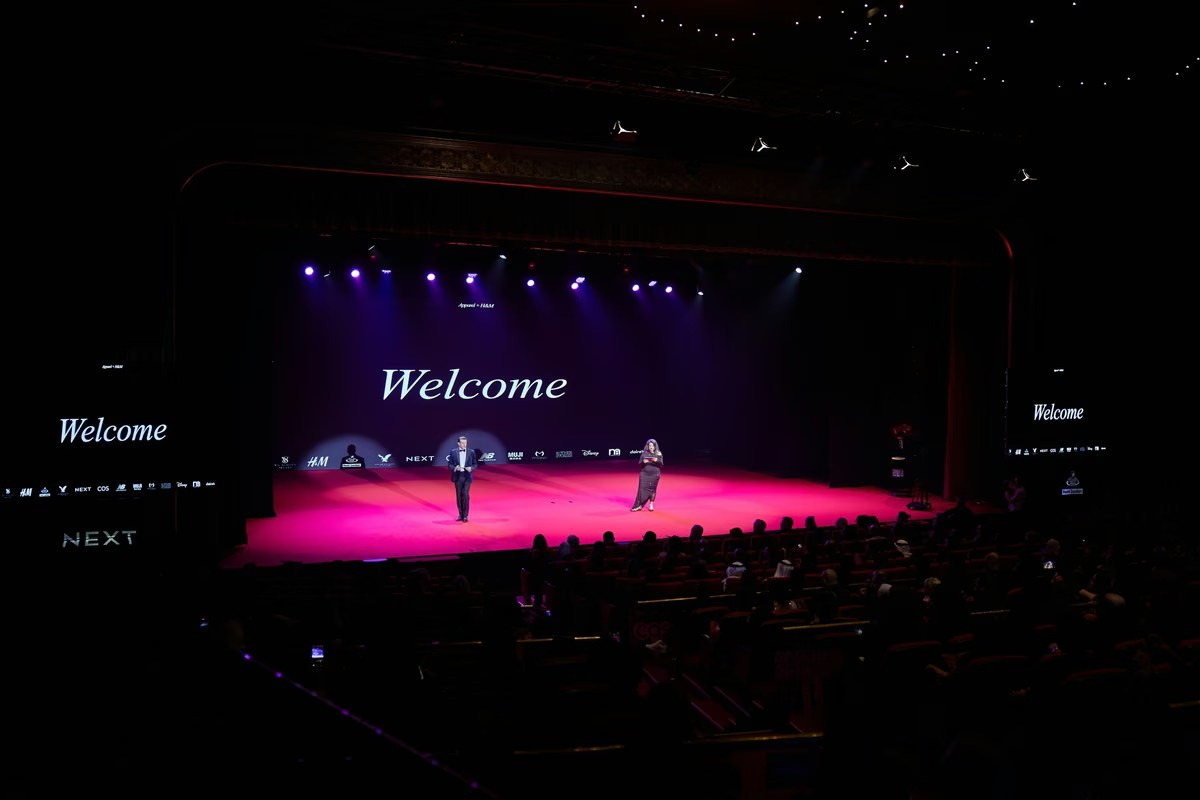
- Venue and stage
- Registration
- Branding
- Speakers
- Panel discussions
- Audience reactions
- Networking
- Awards
- VIP interactions
- Group photographs
- Sponsors
- Details and atmosphere
Photography is particularly effective when content must be published quickly or reused across many formats.
One strong image can work in a press release, website banner, LinkedIn post, internal presentation and sponsor report. It is easy to crop, resize and adapt for different layouts.
Photography also captures brief moments efficiently. A handshake, award presentation or audience reaction may last only a second, but the final photograph can be studied and reused long after the event.
The limitation is that photography does not preserve speech, movement or the sequence in which events happened. It can suggest atmosphere, but it cannot reproduce the experience of hearing a keynote or watching a product demonstration.
What Does Corporate Event Videography Capture?
Videography records movement, sound and time.
It can show how the venue feels, how speakers communicate, how the audience reacts and how the event develops from one stage to the next.
Common video deliverables include:
- Event highlight video
- Complete keynote recordings
- Panel discussion recordings
- Executive interviews
- Guest testimonials
- Social media clips
- Product demonstrations
- Opening and closing videos
- Short same-day edits
Video is particularly valuable when the event includes spoken content.
A photograph of a CEO on stage may show confidence and professionalism. A video can preserve the actual message, tone of voice, audience response and supporting presentation.
Video also creates a stronger sense of atmosphere. Music, applause, movement and transitions between sessions can be combined into a short summary that helps future attendees understand the experience.
However, video usually requires more planning, more equipment and more post-production than photography. The organiser must define what should be filmed continuously and what should be captured selectively.
Photography Is Usually Better for Immediate Publication
Photography is normally the fastest format to select, edit and publish.
This makes it useful for:
- Same-day social media posts
- News announcements
- Press coverage
- Speaker updates
- Sponsor communications
- Internal event summaries
A photographer can often deliver a small edited selection while the event is still in progress, provided same-day delivery is included in the production plan.
This is practical during conferences and exhibitions where the marketing team needs content before the programme has finished.
Video can also be delivered quickly, but even a short edit requires footage selection, music, pacing, colour adjustment, audio processing and export.
A same-day video therefore needs a dedicated workflow and may require an on-site editor.
When speed is the main priority, photography generally provides more usable assets in less time.
Video Is Better for Preserving Speeches and Experiences
Video becomes essential when the value of the event is contained in what people say or demonstrate.
Examples include:
- Keynote presentations
- Training sessions
- Panel discussions
- Product demonstrations
- Executive announcements
- Interviews
- Customer testimonials
A photograph can document that a presentation happened. It cannot preserve the presentation itself.
If an important session may later be shared with employees, clients or registered participants, it should be recorded continuously with professional audio.
This is different from filming a highlight video.
A highlight videographer may capture selected portions of speeches, audience reactions and atmospheric footage. That material may be sufficient for a two-minute summary but not for a complete 45-minute presentation.
Organisers should therefore distinguish between:
- Promotional videography
- Documentary session recording
- Live streaming
- Interview production
These services may use similar cameras but follow different production workflows.
Highlight Video or Full Event Recording?
One of the most important decisions is whether you need a short highlight or complete recordings.
Event Highlight Video
A highlight video is a concise edited summary.
It may include:
- Venue shots
- Guest arrivals
- Speaker excerpts
- Audience reactions
- Networking
- Branding
- Awards
- Music
- Short interview statements
Its purpose is to communicate atmosphere and promote the event or organisation.
The videographer does not necessarily record every session from beginning to end. Instead, the team collects the strongest visual and audio moments required for the final edit.
Full Event Recording
A full recording preserves complete sessions.
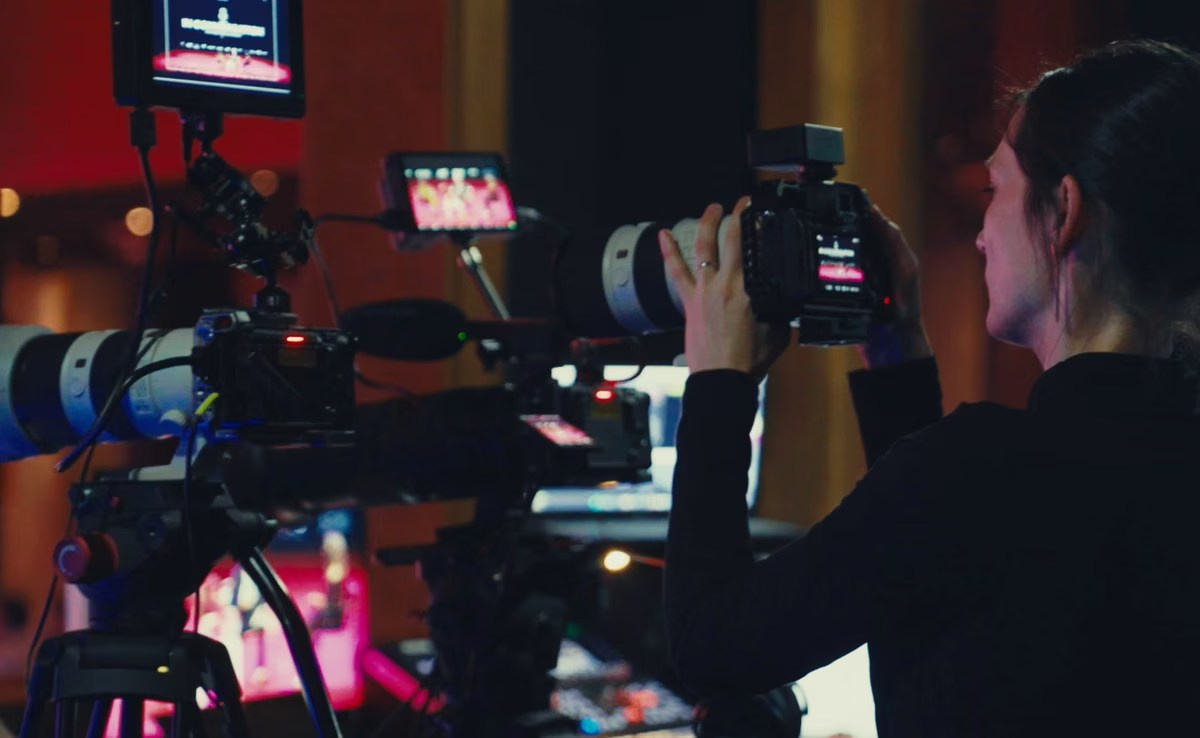
It requires:
- Continuous camera coverage
- Reliable audio
- Presentation capture
- Sufficient storage
- Backup recording
- Clear file organisation
A complete recording is less focused on cinematic variety and more focused on continuity and information.
Some events need both. The production team may record keynotes completely while also capturing additional footage for a promotional highlight.
This must be planned in advance because the team, camera positions and audio workflow may be different.
When Photography Alone May Be Enough
Photography may be sufficient when the main objective is to document participation, atmosphere and brand presence.
Examples include:
- Networking evenings
- Corporate dinners
- Award ceremonies
- Private executive receptions
- Team celebrations
- Exhibition stand coverage
- Short internal events
- Business breakfasts
Even at these events, video can add value, but it may not be essential if there is no significant speech, demonstration or future promotional requirement.
Photography may also be the better choice when guests expect a discreet production presence.
A small executive meeting can become uncomfortable if several cameras, lights and microphones are introduced into the room. One experienced photographer may provide adequate documentation while remaining unobtrusive.
The decision should reflect the character of the event rather than a general assumption that more production is always better.
When Videography Alone May Be Enough
Videography alone may work for highly controlled formats where the main deliverable is a recording.
Examples include:
- Executive announcements
- Training presentations
- Webinars recorded at a venue
- Product demonstrations
- Formal interviews
- Internal communications videos
However, even when video is the primary objective, a small photography component is often useful.
Marketing teams frequently need thumbnails, speaker portraits, website images and social media photographs. Extracting still frames from video is possible, but the result usually offers less resolution and less control over expression than dedicated photography.
For this reason, organisations should confirm whether they need any still images before removing photography from the scope entirely.
When You Need Both Photography and Videography
Combining both services is usually appropriate for:
- Conferences
- Product launches
- Large corporate events
- Exhibitions
- Award ceremonies
- Executive forums
- Hybrid events
- Events with multiple sponsors
- Events intended for future promotion
Photography and video then perform complementary roles.
Photography creates a large library of immediately usable assets. Video preserves sound, movement and narrative.
For example, after a conference:
- Photographs can be used for same-day LinkedIn posts
- A highlight video can promote the next edition
- Full keynote recordings can be shared with participants
- Short video clips can support ongoing social content
- Executive portraits can be used in future communications
The combined value is not simply having more files. It is having different types of content for different stages of the communication cycle.
Crew Size Matters
Hiring photography and videography does not necessarily mean one person can perform both roles.
A single operator may capture a limited combination of photographs and short video clips at a small event. However, the person cannot fully photograph an award presentation and simultaneously record it continuously from another angle.
When both deliverables are priorities, separate specialists are usually more reliable.
The required team depends on:
- Number of rooms
- Number of simultaneous sessions
- Stage size
- Guest count
- VIP schedule
- Interview requirements
- Same-day editing
- Live streaming
- Required recordings
A 500-person event in one ballroom may be covered more easily than a 150-person conference with three parallel sessions.
Crew size should therefore be based on the programme structure rather than guest count alone.
Venue Layout Affects the Decision
The production plan must reflect the actual venue.
Corporate venues in Dubai may include large ballrooms, exhibition halls, offices, outdoor terraces, private dining spaces and multiple breakout rooms.
Important considerations include:
- Distance between rooms
- Lighting conditions
- Stage height
- Audience layout
- Camera access
- Restricted areas
- Audio availability
- Presentation screens
- Cable routes
- Guest movement
A photographer can move relatively quickly between nearby activities. A video team may need fixed camera positions, tripods, audio connections and monitored equipment.
If sessions happen simultaneously in distant rooms, additional crew may be required even when each session is small.
A venue plan and detailed agenda should be shared with the production company before the final quotation is approved.
Photography and Video Require Different Lighting Decisions
The venue lighting may not work equally well for both formats.
Photographers can sometimes use flash during networking, arrivals and group photographs. Videographers generally require continuous lighting or must work with the existing venue setup.
Flash does not improve video because it appears only for a fraction of a second.
Stage lighting also creates practical challenges. A speaker may be brightly lit while the audience remains dark. LED screens may be much brighter than faces. Coloured lights may change skin tones.
The production team should coordinate with the venue or AV provider when the visual quality is important.
One useful adjustment can be reducing screen brightness or increasing the speaker’s front light. Without this balance, the screen may appear readable while the speaker is underexposed, or the speaker may look correct while the presentation becomes completely white.
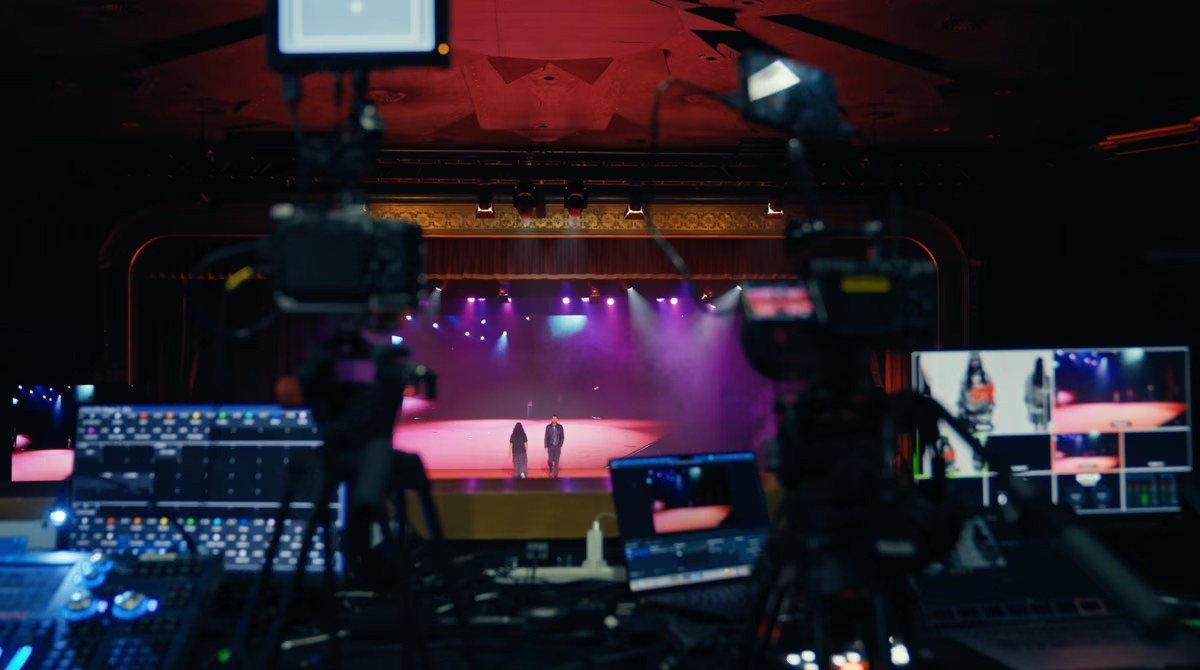
Audio Is a Separate Requirement
Photography does not normally depend on the venue’s sound system. Video does.
If your event includes speeches, interviews or panel discussions, ask how audio will be recorded.
Possible sources include:
- Venue sound system
- Wireless microphones
- Lectern microphone
- Panel microphones
- Separate field recorder
- Camera-mounted microphones
- Backup audio recorder
The sound heard inside the room may not be the same as the signal received by the video team.
A presentation can sound acceptable to attendees while the recording feed is distorted or missing one microphone.
The audio connection should therefore be tested before guests enter the room.
Consider the Guest Experience
Production should document the event without becoming the event.
Photography is generally less intrusive because photographers can move quickly and work without fixed positions.
Video production may involve tripods, camera operators, cables, lights and microphones. These elements need to be positioned carefully.
For conferences, camera positions should avoid blocking audience sightlines. During networking, operators should not repeatedly interrupt conversations to request staged actions.
Executive and VIP events may require an especially discreet approach.
A professional production company should explain how the required content will be captured while respecting the event environment.
Compare Deliverables, Not Only Production Hours
Two suppliers may quote for the same number of hours but offer completely different outputs.
A photography package may include:
- All usable edited photographs
- A limited number of retouched images
- Same-day selections
- Online gallery
- High-resolution and web versions
A video package may include:
- One highlight video
- Full session recordings
- Social media clips
- Interviews
- Subtitles
- Presentation integration
- Multiple aspect ratios
Ask exactly what will be delivered.
“Eight hours of videography” describes the time spent at the venue, not the final product.
The quotation should define the number, type and approximate duration of the final videos, as well as the photography delivery structure.
Plan Content Usage Before the Event
The production team can work more effectively when it understands where the content will appear.
If vertical social media clips are required, some footage should be framed with vertical cropping in mind.
If the images will be used in banners, the photographer should create frames with suitable empty space for text.
If sponsor reporting is important, the team needs a list of required logos, installations and branded moments.
If a future event campaign is planned, the video team should capture arrivals, venue atmosphere, audience participation and moments that communicate scale.
These decisions affect what is recorded. They should not be left entirely until post-production.
Common Mistakes When Choosing Between Photography and Video
Choosing Video Because It Appears More Premium
Video may look more complex, but it is not automatically more useful. A company that needs press images and regular website content may receive more practical value from photography.
Choosing Photography When the Message Matters
If the event contains important speeches, technical explanations or testimonials, photography alone will not preserve that content.
Assuming a Highlight Video Includes Full Speeches
A promotional highlight and a complete session recording are separate deliverables.
Asking One Operator to Do Everything
A single person cannot provide complete photography and continuous multi-angle video coverage at the same time.
Ignoring Audio
Video without clear sound may be unusable even when the images look professional.
Deciding on Deliverables After the Event
The production team cannot recreate footage that was never recorded. Final outputs should be defined before the event begins.
Questions to Ask Before Booking
- What content will we receive after the event?
- Do we need a highlight video, full recordings or both?
- How many photographs will be delivered?
- Will any images be available on the same day?
- How many crew members do you recommend?
- Can simultaneous sessions be covered?
- How will speeches and panel discussions be recorded?
- Will presentation slides appear in the videos?
- Can vertical social media clips be created?
- What is included in post-production?
- How long will delivery take?
- How many revision rounds are included?
- Will local backup recordings be created?
Frequently Asked Questions
Is photography or videography more important for a corporate event?
Neither is universally more important. Photography is usually better for immediate publication and versatile marketing use. Video is better for preserving speech, movement and atmosphere.
Can one person provide both services?
For a small event with limited requirements, one hybrid operator may capture photographs and short video clips. For comprehensive coverage, separate specialists are normally preferable.
Do we need video for a networking event?
Not always. Photography may provide enough useful content. Video becomes more valuable when the event includes interviews, speeches, testimonials or future promotional objectives.
Can photographs be taken from video footage?
Frames can be exported from video, but they normally provide less resolution and less control over timing than dedicated photography.
Do we need full recordings and a highlight video?
Not every event needs both. Full recordings preserve information, while a highlight promotes the experience. The decision depends on how the content will be used.
Which service is delivered faster?
Photography is normally faster to select, edit and publish. Video requires additional editing, audio processing and export.
Can photography and video be combined with live streaming?
Yes. A live-streamed event may also include photography, local video recordings and a separate highlight-production workflow.
Conclusion
Corporate event photography and videography are not competing services. They solve different communication problems.
Photography is fast, flexible and easy to reuse. It captures individual moments that support press, social media, websites, sponsor reports and internal communications.
Videography preserves movement, sound and complete experiences. It is essential when speeches, demonstrations, interviews or event atmosphere need to remain accessible after the programme ends.
The right choice depends on your event structure, content objectives, venue and delivery requirements.
For many corporate events, the strongest solution is a coordinated combination of photography and video, with each team working toward clearly defined outputs.
Planning a Corporate Event in Dubai?
GSP Media provides professional corporate event photography, videography, live streaming and interview production in Dubai and across the UAE.
We help businesses determine the required coverage, select the appropriate crew and plan final deliverables before the event begins.
Blog
Video Podcast Production in Dubai: Complete Business Guide
Professional Event Live Streaming: How It Works

Corporate Event Photo & Video Company Dubai: How to Choose
What Should Be Included in a Corporate Event Photography and Video Quote?


Public vs Private Live Streaming for Corporate Events

Live Streaming vs Recording an Event: Which Should You Choose?

How to Maintain Consistency Across a Fashion Ecommerce Catalogue


AI Content vs Traditional Photography and Video: What Should Your Brand Use?

How to Prepare Product References for AI Content Production
