
AI-assisted content can help brands develop product scenes, campaign concepts, social assets and visual variations without producing every element through a traditional shoot. Traditional photography and video remain essential when the audience needs to see the exact physical product, a real person, a real location or an event that actually happened.
The most useful question is therefore not whether AI is better than conventional production. It is which workflow protects accuracy, supports the campaign idea and produces the required deliverables efficiently.
This guide explains how brands, marketing teams and agencies in Dubai and across the UAE can choose between AI content, traditional photography and video, or a hybrid production that combines both.
The Short Answer
Use traditional production when factual accuracy, authentic human performance, real product behaviour or documentary credibility is central to the project. Use AI-assisted content when the brief requires rapid concept exploration, imaginative environments, controlled variations or new uses for existing approved assets.
A hybrid workflow is often the strongest commercial option: photograph the real product or person accurately, then use AI, compositing and human post-production to extend the scene, create versions or develop a more ambitious campaign world.
What You Will Learn
- What professional AI content production actually includes
- Where traditional photography and video remain stronger
- Which briefs are suitable for AI-assisted production
- How a hybrid workflow protects product and brand accuracy
- What brands should compare before approving a production method
What Is AI Content Production?
Professional AI content production is a structured creative workflow, not a single prompt.
It may combine:
- Creative direction and visual research
- Product and brand reference preparation
- Image or video generation
- Controlled iteration and selection
- Compositing with real photography
- Retouching, colour work and detail correction
- Platform-specific crops and versions
- Human quality control and approval
The deliverable is not valuable simply because AI was used. It must still communicate the product clearly, follow the brand system and work in the intended media placement.
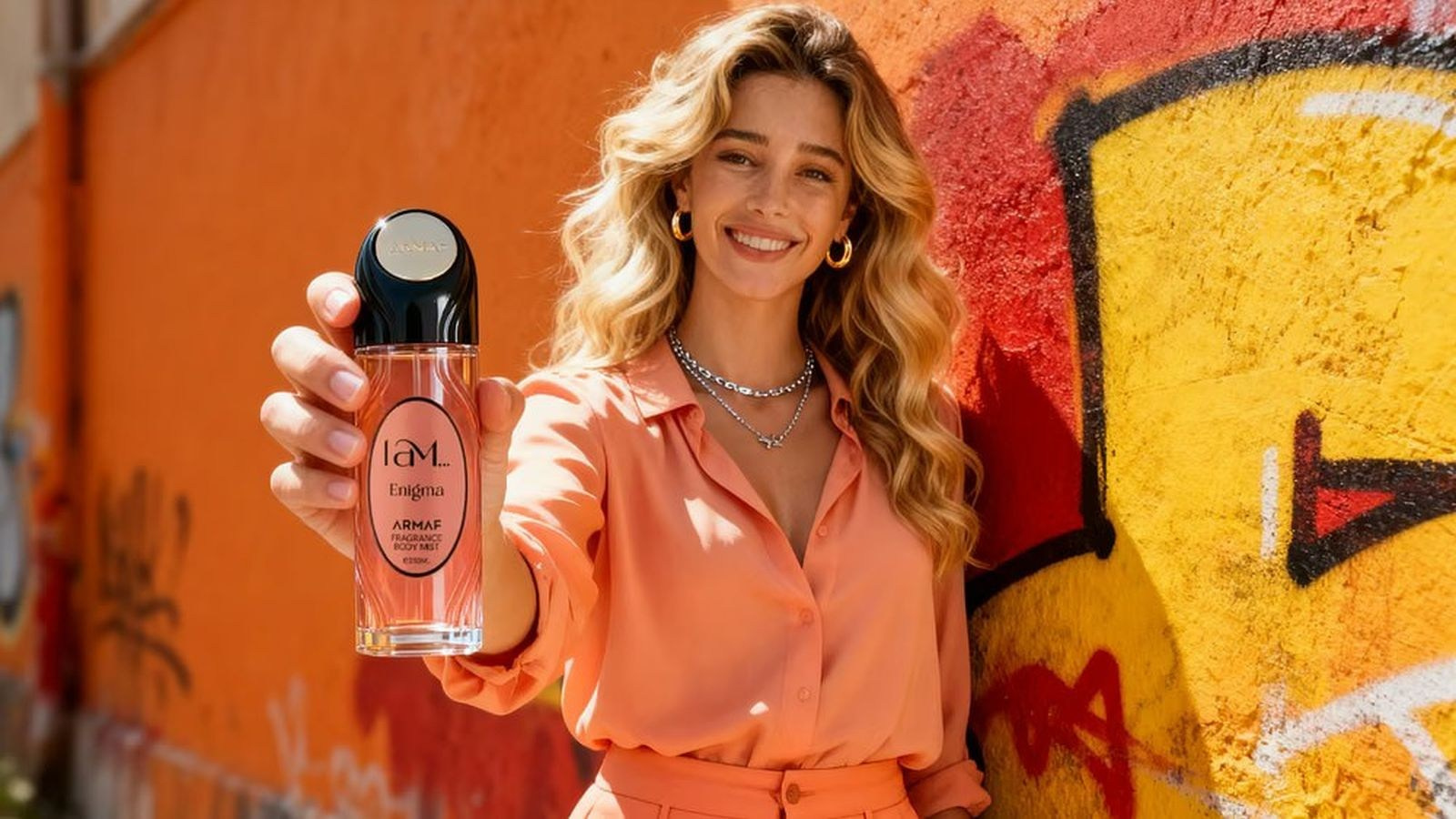
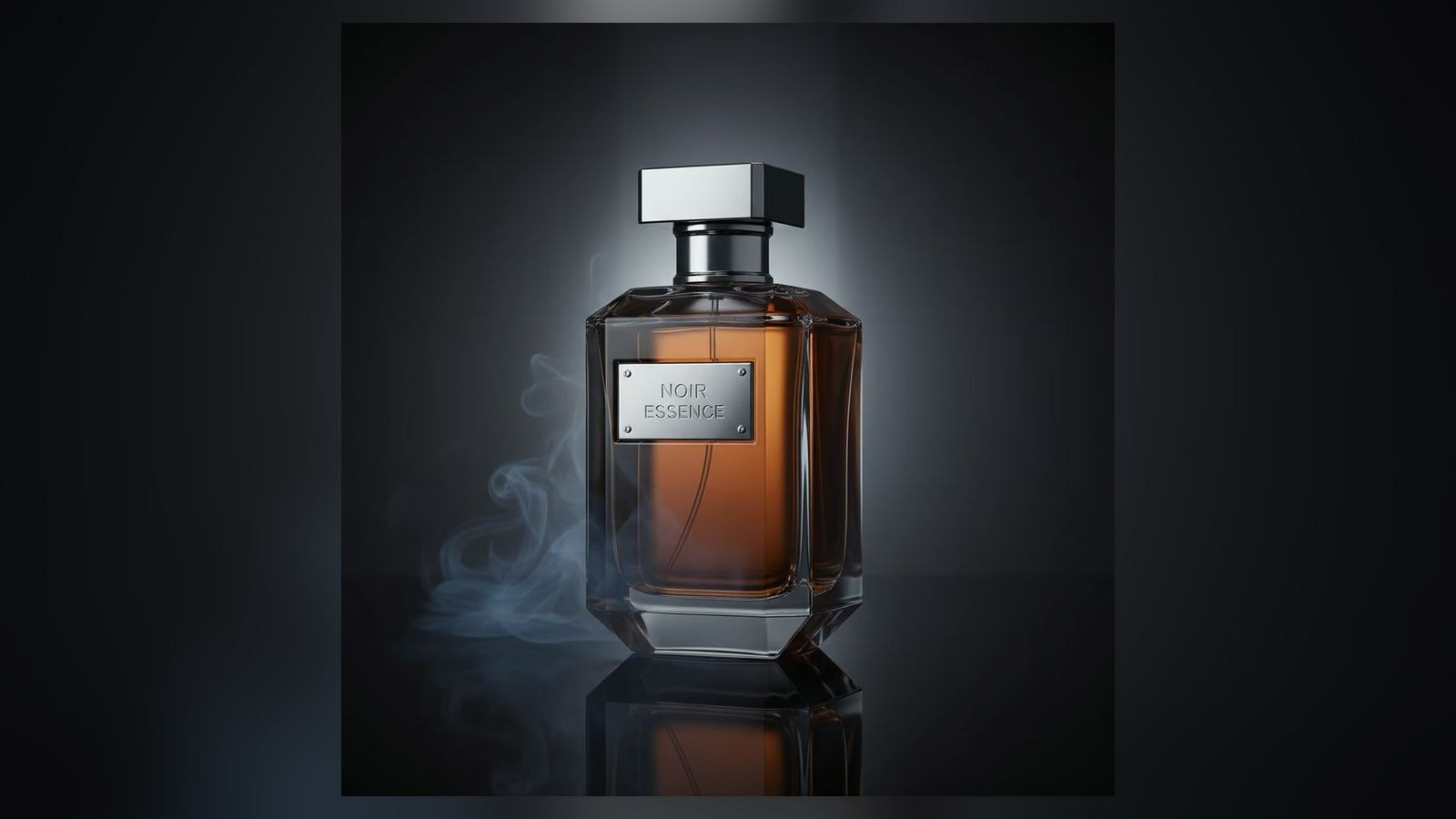
For a perfume brand, for example, AI may help explore an icy environment, a surreal botanical world or several seasonal colour directions. The product bottle, cap, label, liquid colour and proportions still need to match the approved reference.
What Traditional Photography and Video Do Best
Traditional production records real subjects under controlled conditions.
It is usually the most reliable choice when a customer needs to evaluate:
- Exact product shape and construction
- Material, texture and finish
- True colour
- Fit and movement of clothing
- How a product is used
- A real executive, employee or customer
- An actual venue, event or demonstration
Photography also creates a dependable source asset. A clean, high-resolution product image can later be placed into several campaign environments, animated, cropped or combined with AI-generated backgrounds.
Video remains particularly important for authentic speech and performance. A real interview, testimonial, event or technical demonstration depends on the person, voice and action being genuine.
Where AI-Assisted Content Is Strongest
AI production is particularly useful when the brief is based on imagination, variation or extension rather than pure documentation.
Suitable applications may include:
- Campaign concept exploration
- Product scenes that would be difficult to build physically
- Background and environment variations
- Style frames for a future production
- Social content adapted to several formats
- Seasonal versions of an approved visual direction
- Motion concepts developed from still assets
- Extending the canvas around existing photography
AI can make it practical to compare several creative directions before committing to a full campaign. It can also create content for channels with short publishing cycles where a large physical set would be disproportionate to the final asset.

Where AI Content Requires Caution
Generative systems can create visually convincing images while changing important details.
Common risks include:
- Incorrect logos, labels or text
- Changed product proportions
- Invented buttons, seams, closures or accessories
- Unrealistic material texture
- Colour shifts between variations
- Inconsistent packaging from one frame to the next
- Hands, reflections or shadows that do not behave naturally
- A generic visual style that does not feel specific to the brand
These are not only aesthetic problems. If a commercial image shows a feature that the real product does not have, the visual can create the wrong customer expectation.
Product fidelity should therefore be reviewed separately from creative quality. A dramatic scene may be attractive but still unsuitable if the bottle, garment or packaging has changed.
The Hybrid Production Model
A hybrid workflow combines real capture with AI-assisted environments or variations.
A typical product workflow may be:
- Photograph the real product from useful angles
- Create a clean, accurate master image
- Agree the campaign direction and references
- Develop backgrounds or scene concepts using AI
- Composite the approved product into the selected environment
- Refine light, reflections, shadows and colour
- Check product details against the source
- Prepare final sizes and formats
This approach preserves the product while allowing greater creative flexibility around it.
Hybrid production can also begin with existing campaign photography. An approved image may be extended into a wider banner, adapted to a vertical composition or placed into a controlled visual variation, provided the source quality and usage permissions are suitable.
Product Accuracy: The Main Decision
The acceptable level of visual interpretation depends on where the asset will be used.
An ecommerce main image should normally prioritise precise product representation. A campaign teaser may allow greater abstraction. A mood image for a fragrance can communicate atmosphere without explaining every physical detail, while a close product view must remain recognisable and accurate.
Before choosing AI, classify the required accuracy:
- Exact: every product detail must match
- Controlled: the product remains exact while the environment changes
- Interpretive: the image communicates mood or category rather than a literal product view
The production team should know which category applies to every final asset.
Real People and AI-Generated People
Campaigns involving people need additional judgment.
Traditional production is usually preferable when the subject is a real executive, employee, ambassador, model under contract or customer. Their identity, performance and relationship with the brand are part of the content.
AI-generated people may be suitable for some conceptual visuals, but the team should consider consistency, realism, representation, brand tone and the expectations of the audience. Small visual errors may be more noticeable in hands, jewellery, hair, clothing construction and interaction with a product.
For fashion, the garment must also maintain its real cut, fit, print, trim and fabric behaviour. A visually appealing synthetic model is not useful if the clothing becomes a different product.
Real Locations and Events
AI content should not replace documentary production when the purpose is to show that a real event, venue or activity took place.
Conference coverage, corporate interviews, exhibitions, launches and behind-the-scenes material depend on authenticity. AI may support graphics, concept visuals, stage previews or promotional extensions, but it cannot create a trustworthy record of an event that was not captured.
The production method should match the communication promise made to the audience.
Brand Consistency
AI can generate many attractive options quickly, but variety is not the same as a coherent brand system.
A professional brief should define:
- Brand colours and acceptable tonal range
- Lighting character
- Composition and use of negative space
- Materials, props and environments
- Level of realism
- Product scale and orientation
- Typography and logo rules
- Elements that must never appear
Approving one style frame before producing every variation prevents the campaign from becoming a collection of unrelated experiments.
Speed and Production Planning
AI can accelerate visual exploration, but a usable commercial result still requires planning, selection, revision and finishing.
Complex product accuracy, repeated characters, precise packaging and several matching frames may require significant iteration. Video adds continuity: an object can look correct in one frame and change shape as it moves.
Do not plan only for generation time. Include briefing, source preparation, concept approval, product checking, human post-production and final exports.
What Affects the Production Scope?
The quote depends on the complexity of the concept and the number of usable final assets, not only the number of prompts or generations.
Important factors include:
- Number and quality of product references
- Required level of product accuracy
- Number of concepts and final selections
- Still images or motion
- Number of aspect ratios and versions
- Compositing and retouching requirements
- Text, label and artwork correction
- Character or scene consistency
- Revision rounds and approval structure
- Delivery schedule
A clear brief allows the production team to recommend a focused workflow rather than generating a large volume of options without a defined purpose.
How to Choose the Right Method
Use the intended deliverable as the starting point.
Choose Traditional Photography or Video When
- The exact product must be documented
- Fit, texture or physical performance matters
- The content includes real people or testimony
- The location or event must be authentic
- Several future campaigns need a reliable source library
Choose AI-Assisted Production When
- The concept is imaginative or difficult to build physically
- Several visual directions need to be explored
- Existing approved assets need extensions or variations
- The content is primarily for short-cycle digital use
- The product can be protected through references and post-production
Choose a Hybrid Workflow When
- The product must remain exact but the environment can change
- A real model or product needs a more ambitious campaign world
- One physical shoot must support many digital formats
- The team wants creative flexibility with a trustworthy source asset
Questions to Answer Before Production
- What is the business purpose of the content?
- Where will each asset be published?
- How accurately must the product be represented?
- Which details cannot change?
- Do approved product photographs already exist?
- Is the visual documentary, promotional or conceptual?
- How many formats and variations are required?
- Who will approve product and brand accuracy?
- Are there internal disclosure, legal or platform requirements?
- Will the assets need to match future photography or video?
Common Mistakes
Choosing AI Only Because It Appears Faster
Complex accuracy and repeated revisions can remove the expected efficiency. Select the method according to the deliverable.
Using Weak Product References
Low-resolution or incomplete source images make it harder to preserve packaging, materials and proportions.
Approving the Mood but Not the Product
Creative and product reviews should be separate checks.
Generating Every Asset Independently
Without an approved style frame, colours, scale and environments can drift across the campaign.
Expecting Post-Production to Repair Every Detail
Human refinement is essential, but rebuilding every product feature may be less efficient than starting with real photography.
Ignoring Final Formats
A horizontal concept may not adapt naturally to vertical social content. Aspect ratios should be considered during composition.
Frequently Asked Questions
Can AI content replace a product photoshoot?
It can replace or reduce some types of conceptual production, but accurate source photography is often still the safest foundation for ecommerce, packaging detail and material representation.
Is hybrid content still AI content?
Yes. AI may create or extend parts of the image while the real product, person or environment remains the controlled source.
Can AI visuals be used for print?
Potentially, if the selected output has sufficient resolution and survives detailed quality control. Print dimensions and finishing requirements should be defined before production.
Can one concept be adapted for several platforms?
Yes, but vertical, square and horizontal compositions should be planned rather than treated as automatic crops.
How do we protect brand consistency?
Use approved references, one visual direction, defined product rules and a centralised review process.
Should audiences be told that AI was used?
Disclosure needs depend on the platform, campaign, jurisdiction and internal brand policy. The responsible team should confirm the applicable requirements for each use.
Conclusion
AI content and traditional production are different tools, not opposing creative philosophies.
Traditional photography and video provide accuracy, authenticity and dependable source material. AI-assisted production expands concept development, scene creation and variation. A hybrid workflow combines these strengths when the product must remain exact inside a more flexible campaign world.
The best production method is the one that protects the communication goal, product truth and brand consistency while delivering assets that are genuinely usable.
Planning AI-Assisted Content in the UAE?
GSP Media combines creative direction, product references, AI generation and human post-production to create campaign visuals and digital content for brands and agencies in Dubai and across the UAE.
We can help determine whether your brief needs AI-assisted production, a traditional shoot or a controlled hybrid workflow.
Blog

How to Prepare Product References for AI Content Production

How Many Product Images Does an Ecommerce Product Page Need?

What Affects the Cost of Professional Live Streaming in Dubai?

How to Plan Photography and Video for a New Fashion Collection

How Product Photography Pricing Is Calculated

What Should Be Included in a Video Podcast Production Quote?


How Many Short Videos Can You Create From One Video Podcast?
Ecommerce Fashion Photography vs Campaign Photography
Product Photography vs Product Videography: What Does Your Brand Need?
How to Prepare Clothing for an Ecommerce Fashion Photoshoot
White Background vs Lifestyle Product Photography
Ecommerce Fashion Photography: Model, Mannequin or Flat Lay?
How to Prepare Products for a Commercial Photoshoot
