
A corporate podcast and a video interview can look similar on screen: people speaking on camera, professional lighting, clean audio and branded graphics. Strategically, however, they solve different problems.
A corporate podcast is normally a repeatable editorial format. It is designed to build a recognisable voice over a series of episodes, develop relationships with guests and generate a continuing stream of long-form and short-form content. A video interview is usually a focused production built around one person, one subject or one communication objective.
The right choice depends less on which format feels more current and more on what the business needs to communicate, how often it can publish and who can consistently participate.
This guide compares both formats and explains how companies in Dubai and across the UAE can choose a production approach that remains useful after the first recording.
What You Will Learn
- How corporate podcasts and video interviews differ
- Which business goals each format supports
- How preparation, filming and editing change between them
- Which format creates a stronger long-term content system
- When both formats should be combined
- What to decide before requesting a production quote
The Short Answer
Choose a corporate podcast when the company has an ongoing subject, a credible host and enough access to guests or internal experts to sustain a series. Choose a video interview when the priority is one clear message, one spokesperson or one campaign deliverable.
A podcast asks the audience to return. An interview asks the audience to understand a specific person or idea.
Neither format is automatically better. A well-produced interview can generate more business value than a podcast that stops after three episodes. A podcast can become a powerful content engine when the editorial premise is clear and production is planned as a repeatable system.
What Is a Corporate Podcast?
A corporate podcast is a recurring programme created around a company, industry or professional point of view. It may feature one host, two hosts, executive conversations, guest interviews or roundtable discussions.
Common objectives include thought leadership, executive visibility, client education, recruitment, partner engagement and industry networking. The complete episodes may be published on YouTube, a company website or audio platforms, while shorter extracts support LinkedIn, Instagram and other channels.
The defining feature is continuity. The audience should understand why another episode will be worth watching. That requires a clear editorial territory rather than a broad promise to discuss business.
What Is a Corporate Video Interview?
A corporate video interview is a focused conversation recorded for a defined communication purpose. It may feature a CEO explaining strategy, a subject-matter expert answering customer questions, a client describing an experience or a speaker contributing to an event recap.
The interview can be published as a complete piece, edited into a shorter film or used as selected statements inside a larger video. It does not need to become a series.
This makes the format useful when a business has an important person and message but does not need the publishing commitment of a podcast.
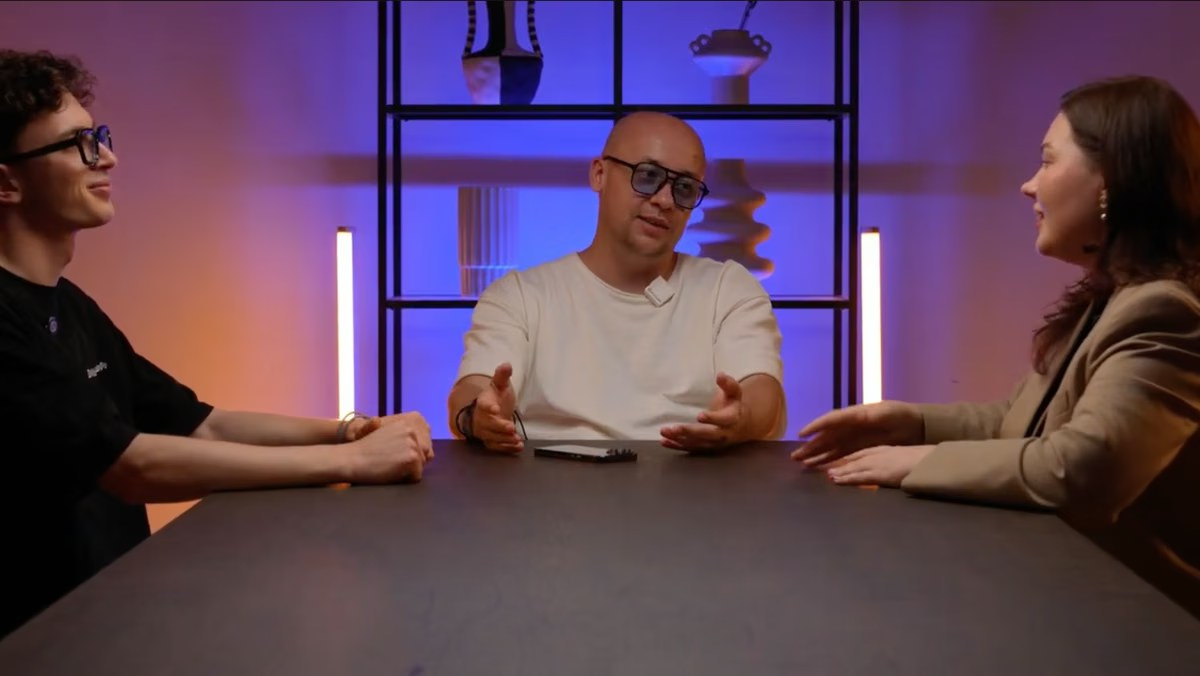
The Fundamental Difference: Series or Standalone Asset
The most important distinction is not technical. It is editorial.
A podcast creates an expectation of repetition. Its title, visual identity, host, episode structure and release schedule should remain recognisable. Each conversation must work individually while contributing to a larger body of content.
A video interview can be designed from the beginning around one objective. The questions, location, duration and edit are chosen to communicate that message efficiently. There is no need to create a permanent show identity unless the company intends to repeat the format.
This difference affects the entire workflow. A podcast benefits from reusable sets, templates and batch recording. An interview can justify a more specific location, visual treatment and narrative structure because it does not need to be reproduced every month.
When a Corporate Podcast Is the Better Choice
You Have a Repeatable Point of View
A strong podcast is built around a subject the company can explore from many angles. The topic should be narrow enough to attract a clear audience but broad enough to support future episodes.
For example, a property company might discuss urban development and investment rather than simply interview people from the real estate industry. A technology business might focus on practical digital transformation rather than general innovation.
You Can Commit to More Than One Episode
One episode may be useful, but it does not establish a programme. Before creating the set and visual identity, confirm that the company can produce an initial series and maintain a realistic publishing rhythm.
Consistency does not mean recording every week. Several episodes can be recorded in one production day and released gradually. This reduces repeated setup and makes executive schedules easier to manage.
You Want a Long-Term Content Engine
A complete podcast episode can support shorter clips, quote videos, written extracts, newsletters and articles. The real advantage is not an unlimited number of assets; it is the ability to build several meaningful pieces from one well-structured conversation.
The questions should be planned with distribution in mind. A concise answer with a clear point can become a strong social clip. A ten-minute answer that depends on earlier context may work in the full episode but be difficult to reuse.
Guest Relationships Matter
Inviting clients, partners and industry specialists can extend the programme beyond the company itself. A thoughtful interview creates value for the guest and may introduce the content to a relevant new audience.
The guest list should follow the editorial idea. Selecting people only because they have large audiences can make the series feel disconnected.
When a Video Interview Is the Better Choice
You Need One Clear Business Message
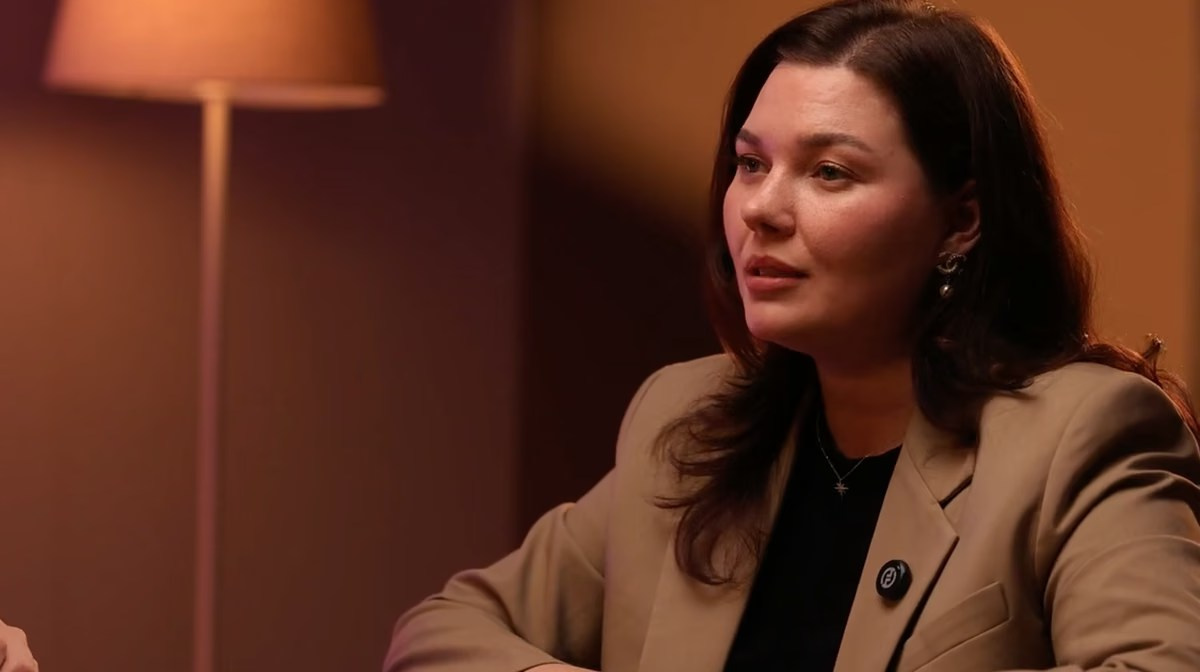
An interview works well for an executive announcement, company profile, recruitment campaign, expert explanation or event communication. The production can concentrate on the strongest answers without creating a larger show format.
The Spokesperson Has Limited Time
Senior leaders may be available for one carefully planned recording but not a recurring programme. A prepared interview can capture several topics during one session and create material for different communications.
Availability should be used efficiently, but the schedule still needs time for microphone placement, lighting adjustments and repeated answers. Treating an executive interview as a quick calendar item often produces rushed delivery and limited editing options.
The Content Belongs to a Campaign or Event
A video interview can support a product launch, annual report, conference, exhibition or employer-branding campaign. It can be filmed at the relevant location so the environment contributes to the story.
At events, interviews need a controlled position away from loud networking areas. A visually active exhibition stand may appear attractive but produce unusable audio if the room is crowded.
You Need Greater Narrative Control
Podcast conversations often preserve a natural flow. Corporate interviews can be edited more tightly, supported by additional footage, graphics and presentation material, and shaped around an approved narrative.
This does not mean scripting every answer. Over-rehearsed responses frequently sound less credible. A clear briefing and conversational questioning normally produce more natural statements.
How the Production Workflows Compare
Editorial Preparation
A podcast requires a programme concept, host, guest plan and repeatable episode structure. A standalone interview requires a communication objective, key messages and a focused question sequence.
Set and Location
Podcast production benefits from a consistent visual environment. A video interview can use an office, event venue, project location or temporary studio selected for that specific story.
Camera Coverage
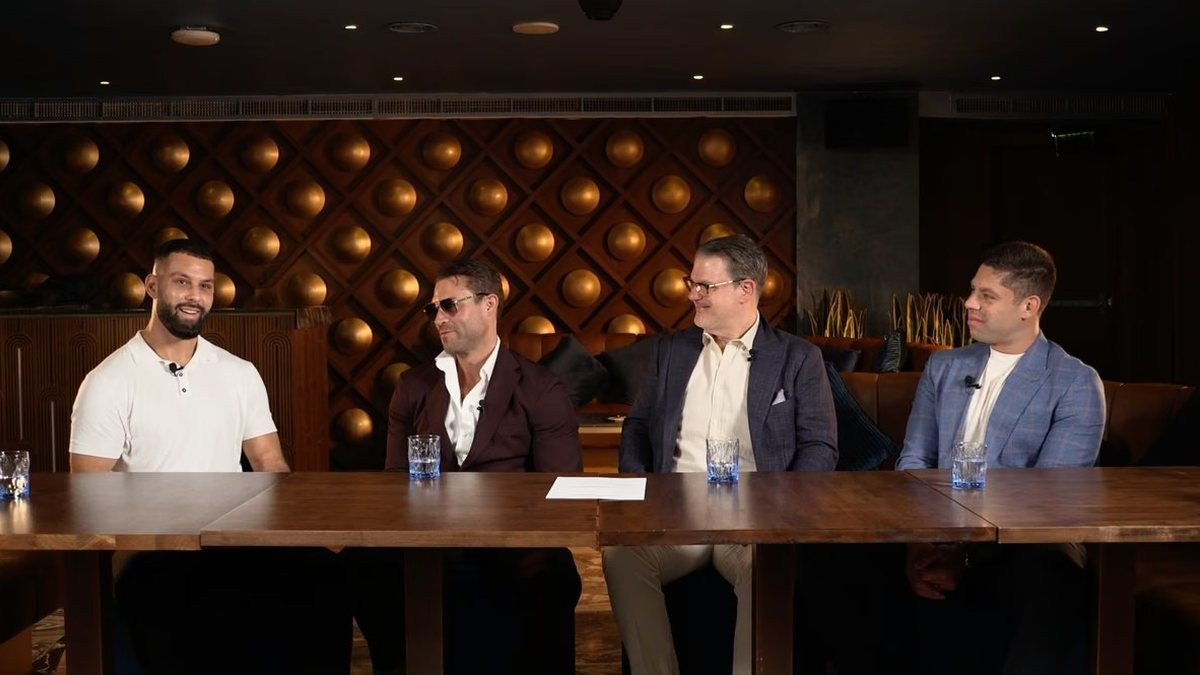
A two-person podcast often uses individual cameras for the host and guest plus a wide angle. A single-person interview may use two cameras for editorial flexibility, but it can also work with one carefully composed angle when the format is simple.
Audio
Both formats require clear, individually controlled speech. A polished set cannot compensate for echo, air-conditioning noise or microphone problems. On-location interviews and roundtables should be assessed for sound, not only appearance.
Editing
Podcast editing usually protects the rhythm of a longer conversation and maintains visual consistency across episodes. Interview editing may be more selective and can combine the speaker with supporting footage, graphics and other voices.
Approval
A podcast series needs an approval workflow that does not become a bottleneck every episode. A high-profile executive interview may require closer review from leadership, communications or legal teams.
Can a Business Use Both Formats?
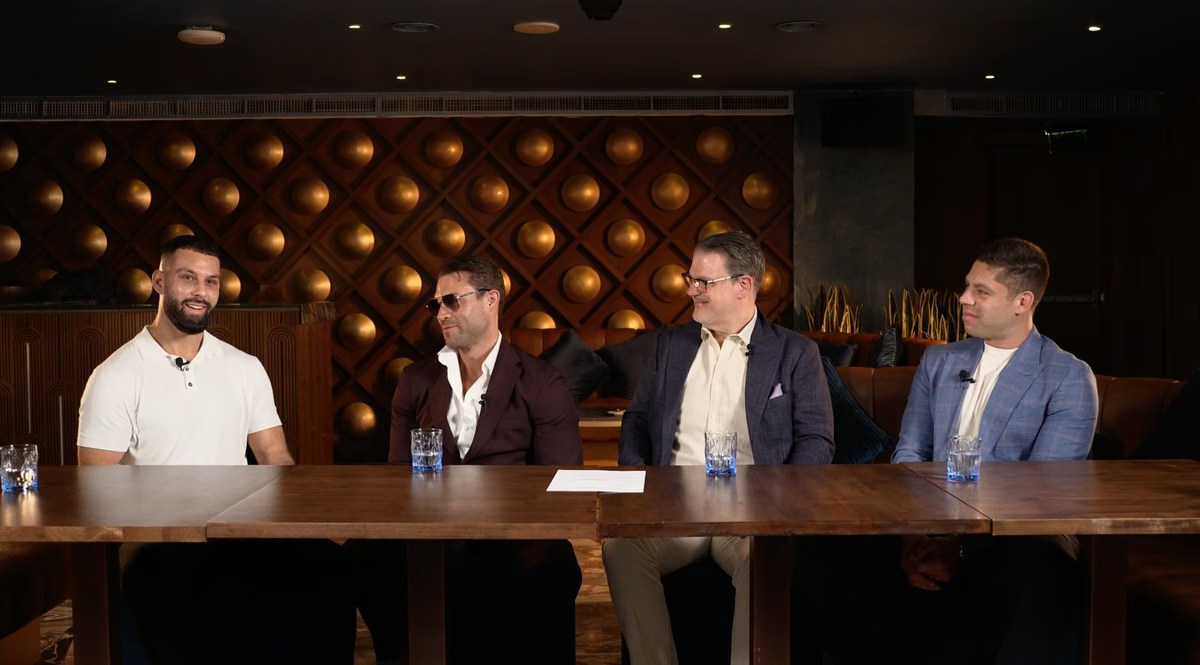
Yes. The most efficient strategy is often to treat the podcast as the recurring platform and use focused interviews for specific campaigns, leaders or events.
A podcast guest conversation may also provide selected interview statements, but the two outputs should be planned separately. A natural hour-long discussion is not automatically a concise executive message.
During one production day, a company may record a complete episode, a short direct-to-camera introduction and several campaign answers. This works best when the deliverables are defined before filming so camera framing, wording and calls to action can be captured correctly.
How to Choose the Right Format for Your Business
Before deciding, answer these questions:
- Is this a recurring subject or a single communication need?
- Do we have a suitable host?
- Can we access enough relevant guests or internal experts?
- Can the organisation approve and publish content consistently?
- Do we need a complete conversation or a controlled message?
- Where will the full video and short clips be published?
- Will this format still make sense after the first recording?
If the answers point toward continuity, audience development and recurring conversations, a corporate podcast is likely the stronger choice. If they point toward one spokesperson, one campaign and one defined message, begin with a video interview.
Common Mistakes
Starting a Podcast Without an Editorial Premise
A branded set and professional cameras do not create a reason to watch. The programme needs a clear subject and audience.
Choosing a Podcast Because It Is Popular
A company should not commit to a series unless it can maintain the host, guests, approvals and distribution required to support it.
Treating an Interview Like an Unstructured Conversation
A corporate interview needs defined messages and a question sequence, even when the delivery should feel natural.
Planning Only the Long Video
If short clips are required, the production team should know in advance. Strong excerpts depend on concise questions, complete answers and framing that works across formats.
Ignoring the Recording Environment
Glass meeting rooms, open offices and event halls may look good but create reflections, interruptions and echo. Location decisions must consider audio, space and control.
Frequently Asked Questions
Is a corporate podcast always a series?
It is normally designed as a repeatable programme. If the business needs only one focused conversation, a video interview may be a clearer description and a more efficient production choice.
Which format is better for a CEO?
Use an interview for a specific leadership message. Use a podcast when the executive is comfortable hosting or joining recurring, less scripted conversations.
Can a video interview be filmed in an office?
Yes, if the room has enough space and the noise, echo, lighting and interruptions can be controlled. A technical review may be useful before the recording.
How many cameras are needed?
A two-person podcast commonly benefits from three angles. A focused interview may use one or two cameras. The correct setup depends on the participants, edit and location.
Can one recording create social media clips?
Yes. The conversation should contain self-contained ideas with clear openings and conclusions. The required vertical or horizontal formats should be agreed before filming.
Can podcasts and interviews be recorded across the UAE?
Yes. Studio and on-location production can be planned in Dubai, Abu Dhabi, Sharjah, Ras Al Khaimah and other UAE locations, subject to venue access and production requirements.
Conclusion
A corporate podcast is the stronger choice when a business wants to build a recurring editorial platform, develop an audience and create content over time. A video interview is better when the organisation needs one clear message, one spokesperson or one campaign asset.
The decision should follow the communication objective, not the appearance of the format. When the editorial purpose is clear, the production team can design the right set, camera coverage, audio workflow and deliverables from the beginning.
Planning a Corporate Podcast or Video Interview in the UAE?
GSP Media produces professional video podcasts and corporate interviews in Dubai and across the UAE. Our team can support concept development, studio or on-location recording, multi-camera production, professional audio, lighting, editing and short-form content.
Blog

How to Prepare a Corporate Event Photography and Video Brief

How to Prepare a Venue for Professional Live Streaming
How Multi-Camera Live Streaming Works
How Multi-Camera Video Podcast Production Works
How Many Cameras Does a Corporate Event Need?
How to Prepare a CEO or Executive for a Video Interview

Why Backup Internet Is Essential for Event Live Streaming

What Affects Corporate Event Photography and Video Costs?
Event Photography vs Videography: What Does Your Event Need?
Video Podcast Production in Dubai: Complete Business Guide
Professional Event Live Streaming: How It Works
Corporate Event Photo & Video Company Dubai: How to Choose
What Should Be Included in a Corporate Event Photography and Video Quote?

