
Video podcasts have become an effective way for businesses to share expertise, interview industry leaders, communicate with clients and create a consistent supply of content for websites and social media.
Unlike a traditional audio podcast, a video podcast records both the conversation and the visual interaction between participants. The complete episode may be published on YouTube or a company website, while shorter excerpts can be adapted for LinkedIn, Instagram, TikTok and other platforms.
However, placing two people in front of cameras does not automatically create a professional business podcast. The quality of the final result depends on the format, room, lighting, sound, camera coverage, set design, preparation and post-production workflow.
This guide explains how professional video podcast production works, which decisions businesses need to make before recording and how to build a format that can be produced consistently.
What You Will Learn
By the end of this guide, you will understand:
- How a professional video podcast is produced
- Which recording format may suit your business
- How many cameras and microphones may be required
- When to record in a studio or at your own location
- How the set and lighting affect the programme
- What should be prepared before recording
- Which deliverables can be created from one session
- What to compare when choosing a production company in Dubai
What Is a Business Video Podcast?
A business video podcast is a recorded discussion created around a company, industry or professional subject.
Common formats include:
- Interviews with executives or external experts
- Conversations between company leaders
- Industry commentary
- Educational episodes
- Client or partner discussions
- Internal communication programmes
- Founder-led content
- Roundtable discussions
- Recruitment and employer-branding content
The format can be formal or conversational, but it should support a clear business objective.
A company may use a podcast to build authority in a specialised market, explain complex services, support executive visibility or generate regular social media content.
The purpose should be established before discussing cameras or studio design. A podcast created for technical decision-makers requires a different tone and structure from a founder-led programme intended to introduce the company to a wider audience.
Start With a Clear Content Strategy
The most common production mistake is beginning with equipment rather than content.
Before recording, define:
- Who the intended audience is
- What subjects the programme will cover
- Why viewers should follow it
- Who will host the conversations
- How frequently episodes will be released
- Where the complete episodes will be published
- Which shorter formats are required
A strong podcast needs a recognisable editorial direction.
“Talking about business” is too broad. A better concept might focus on retail expansion in the Gulf, leadership in family-owned companies, technology in hospitality or practical advice for businesses entering the UAE market.
A focused subject helps guests prepare, gives the audience a reason to return and allows the company to build authority in a specific area.
Consistency also matters. It is usually more effective to create a repeatable format that can support a series than to treat every episode as a completely separate production.
Choose the Right Podcast Format
The format affects the required space, crew, equipment and editing.
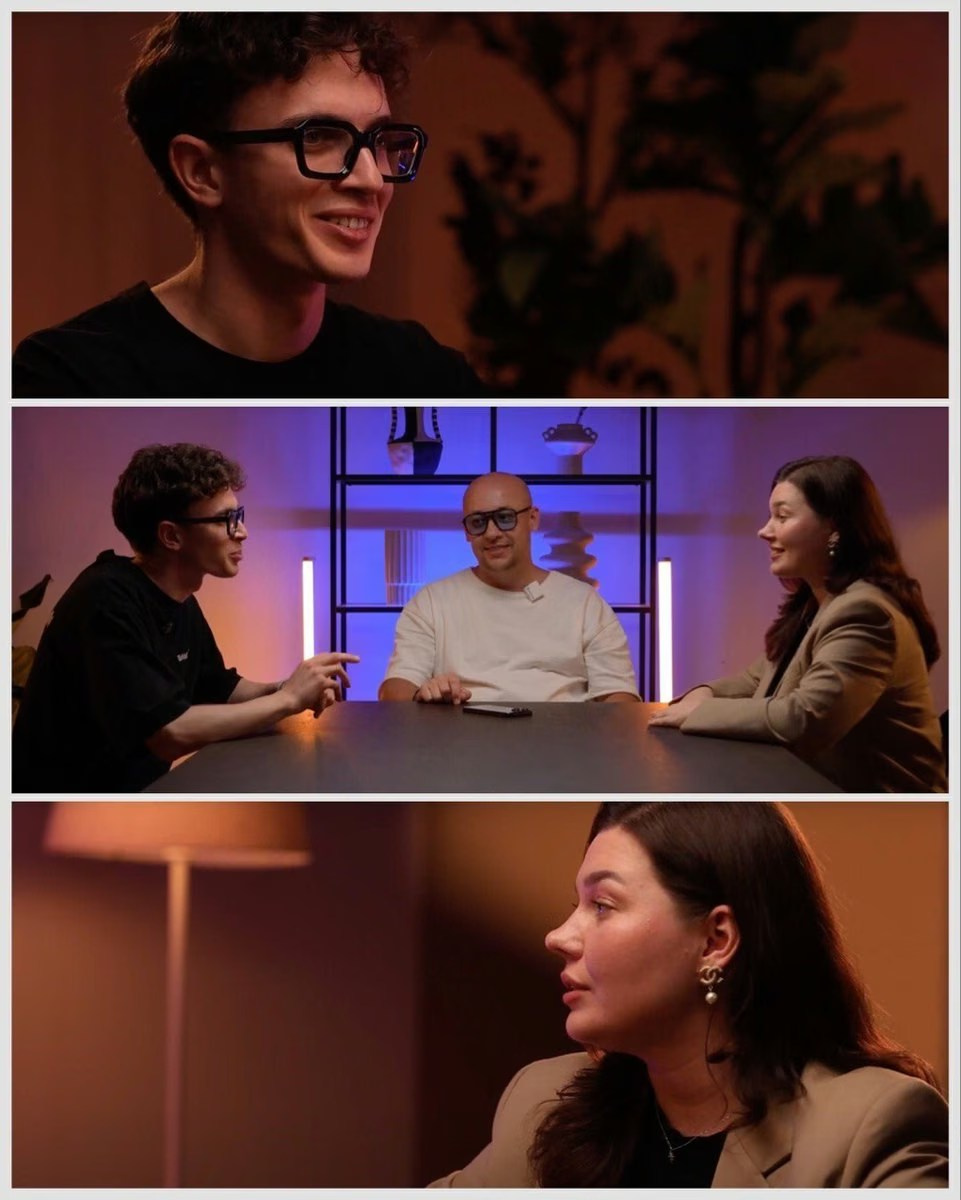
One Host and One Guest
This is the most common business podcast format.
It is straightforward to plan and creates a natural conversation. Each participant can have a dedicated camera, while a third angle captures both people together.
This format works well for executive interviews, expert discussions and client conversations.
Two Hosts
Two-host programmes can create a consistent identity because the same personalities appear in every episode.
The hosts need clearly defined roles. If both people constantly compete to lead the conversation, the programme may become difficult to follow.
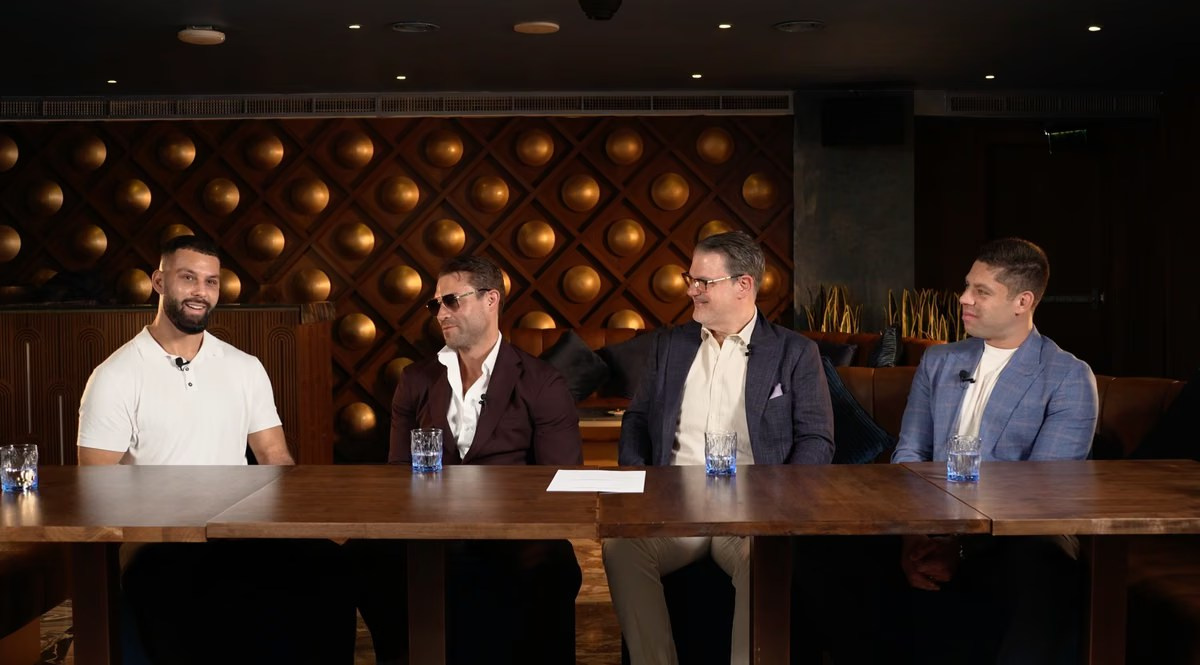
Roundtable Discussion
A roundtable may include three or more participants.
This format can produce strong discussions, but it requires more microphones, wider camera coverage and careful moderation. Participants also need enough space to face one another without turning completely away from the cameras.
The complexity increases quickly as more people are added. A four-person discussion is not simply a two-person interview with additional chairs.
Solo Presentation
A solo video podcast is closer to an expert presentation or commentary programme.
It can be recorded efficiently, but the presenter must carry the complete episode. A clear structure, confident delivery and supporting graphics become particularly important.
Remote or Hybrid Podcast
A guest may join remotely when travelling to the recording location is not practical.
The production team can combine the studio host with the remote participant, but the final quality will depend partly on the guest’s camera, microphone, lighting and internet connection.
Remote guests should receive clear technical instructions and complete a test before the recording.
Studio or On-Location Production?
Businesses can record in a professional studio or build a temporary podcast setup at their office, event venue or another location.
Neither option is automatically better.
Recording in a Studio
A studio provides a controlled environment.
Potential advantages include:
- Better acoustic treatment
- Controlled lighting
- Reliable power and internet
- Existing camera positions
- Fewer background interruptions
- Faster setup
- A consistent appearance across episodes
Studio production is particularly useful when several episodes will be recorded in one day.
The main limitation is that the available set may not reflect the company’s visual identity. Some studios allow furniture, screens, lighting colours and decorative elements to be customised.
Recording at the Company’s Location
Recording at an office or branded environment can make the podcast feel more closely connected to the business.
It may also be more convenient for executives and internal guests.
However, offices frequently create production challenges:
- Air-conditioning noise
- Hard walls and glass surfaces
- External construction
- Meeting-room interruptions
- Limited space for cameras
- Mixed or unsuitable lighting
- Reflective backgrounds
- Insufficient electrical access
A visually attractive meeting room may sound poor because glass, stone and empty walls create strong echoes.
The location should therefore be assessed for both appearance and acoustics. A site visit or detailed technical review is useful before confirming an on-location recording.
How Many Cameras Does a Video Podcast Need?
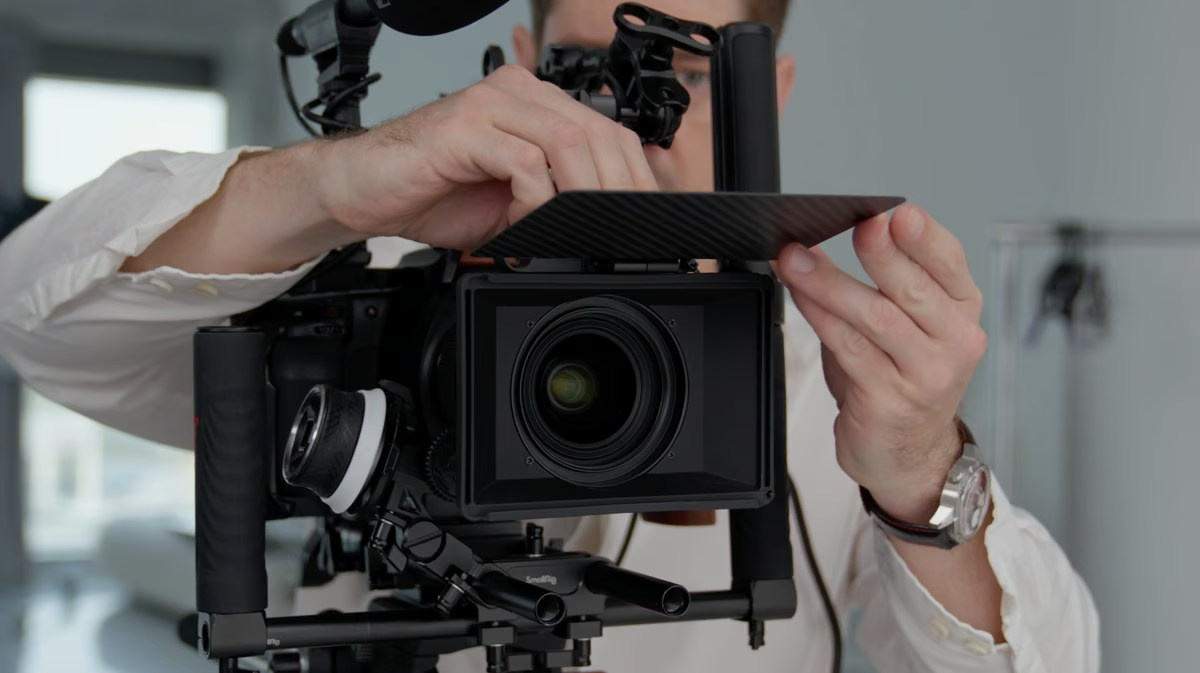
A professional video podcast commonly uses two or three cameras.
Two-Camera Setup
A two-camera setup may provide one angle for each participant.
This creates clean individual shots, but there may be no wide view showing both people together.
The editor must also avoid displaying the wrong person when someone reacts silently or interrupts briefly.
Three-Camera Setup
A three-camera setup commonly includes:
- One camera for the host
- One camera for the guest
- One wide camera showing both participants
The wide shot creates visual variety and provides a safe editing option when the conversation overlaps.
It is also useful for the introduction, conclusion and moments when participants refer to something on the table or interact physically.
Additional Cameras
More cameras may be needed for roundtables, product demonstrations or programmes with several guests.
The objective is not to create the highest possible camera count. Each additional camera adds equipment, setup time, monitoring and data management.
The correct number is the minimum required to edit the conversation naturally without leaving important actions uncovered.
Professional Audio Is the Priority
Viewers may accept a simple set or a limited number of camera angles. They are less likely to accept unclear sound.
Each participant should normally have an individual microphone.
Common options include:
- Broadcast microphones positioned on arms or stands
- Lapel microphones attached to clothing
- Small directional microphones positioned outside the frame
- Headset microphones for specific presentation formats
Visible broadcast microphones can become part of the visual identity of the programme. They create a recognisable podcast appearance and usually remain in a consistent position.
Lapel microphones create a cleaner frame but may capture clothing movement and more room noise.
The microphone choice should reflect the format, room and intended visual style.
Audio should ideally be recorded on separate channels. This allows the editor to adjust participants independently, reduce unwanted noise and manage interruptions more effectively.
A single mixed recording offers less control if one participant speaks quietly while another speaks loudly.
Lighting and Set Design
The set should support the conversation rather than compete with it.
A professional video podcast does not necessarily require an elaborate studio. A carefully selected background, suitable furniture and controlled lighting can create a strong result.
Useful set elements may include:
- Branded colours
- Practical lamps
- Plants
- Shelving
- Screens
- Relevant products
- Subtle company branding
- Textured backgrounds
Large logos do not need to appear in every camera angle. Excessive branding can make the programme feel like an advertisement rather than useful editorial content.
Lighting should separate participants from the background, maintain natural skin tones and remain consistent between camera angles.
The production team also needs to control reflections on glasses, polished furniture and screens.
One practical problem is positioning participants too close to the background. This reduces visual depth and can create unwanted shadows. Where space allows, separating the speakers from the background usually produces a more polished image.
Prepare the Host and Guest
Technical quality cannot compensate for an unprepared conversation.
The host should understand the guest, subject and intended audience. A list of questions is useful, but the recording should not sound like someone reading from a document.
A practical preparation package may include:
- Episode objective
- Short guest biography
- Main discussion themes
- Suggested questions
- Subjects to avoid
- Required brand messages
- Approximate episode length
- Planned call to action
Questions should be shared in advance when the subject is technical, sensitive or highly regulated.
However, sending a complete script may encourage the guest to memorise responses, making the conversation sound less natural.
The host should also know how to redirect long answers, ask follow-up questions and prevent several participants from speaking at the same time.
What Should Participants Wear?
Clothing should be considered before the recording day.
Participants should generally avoid:
- Very small patterns
- Highly reflective materials
- Noisy jewellery
- Clothing that blends into the background
- Visible unrelated brand logos
- Fabrics that create microphone noise
If lapel microphones are being used, loose jackets, necklaces and certain synthetic fabrics may rub against the microphone.
It is useful to ask participants to bring an alternative jacket or top, particularly when the final set design has not been seen in person.
The goal is not to impose a rigid dress code. It is to prevent avoidable visual or audio problems.
What Happens During the Recording?
The production team should complete camera, lighting and sound checks before the speakers enter the set.
Participants then need time for microphone placement, seating adjustments and a brief explanation of the process.
Before the main conversation begins, the team may record:
- A short introduction
- Participant name pronunciations
- A visual and audio test
- Several seconds of silence for audio editing
- Alternative opening lines
- Promotional statements
- Calls to action
The recording should not be stopped after every small mistake. Minor pauses and repeated words can often be corrected during editing.
Constantly restarting can interrupt the natural flow and make participants more self-conscious.
However, factual errors, incorrect company names and incomplete calls to action should be corrected immediately while everyone is still on set.
Post-Production and Editing
Post-production converts the raw conversation into a finished episode.
The process may include:
- Synchronising cameras and audio
- Selecting camera angles
- Removing major mistakes and unnecessary pauses
- Colour correction
- Audio cleaning and mixing
- Adding opening and closing graphics
- Adding speaker names and titles
- Inserting logos or presentation materials
- Adding subtitles
- Exporting platform-specific versions
The editing style should be agreed before recording.
Some businesses prefer a natural conversation with minimal cuts. Others want a faster programme with graphics, supporting footage and frequent angle changes.
Heavy editing can improve pace, but it also requires more production time and may make a serious executive discussion feel overly processed.
The most appropriate approach depends on the audience and platform.
Creating Short-Form Content From Each Episode
One of the main commercial advantages of a video podcast is that a single recording can produce multiple pieces of content.
Possible deliverables include:
- Complete horizontal episode
- Audio-only version
- Short vertical clips
- LinkedIn excerpts
- YouTube Shorts
- Episode trailer
- Quote videos
- Promotional photographs
- Thumbnail images
- Written transcripts
- Short articles based on the discussion
Short clips should not simply be random segments removed from the episode.
Each clip needs a clear opening, complete idea and useful conclusion. A viewer who has not watched the full episode should still understand the point.
It helps to identify potential short-form moments while planning the episode. Strong questions can be designed to generate concise answers, practical advice or clear opinions.
Recording Several Episodes in One Day
Batch production can reduce setup time and help businesses maintain a consistent publishing schedule.
Several episodes may be recorded during one studio day, provided the schedule remains realistic.
Time is required for:
- Guest arrival
- Microphone placement
- Sound checks
- Breaks
- Set adjustments
- Changing graphics
- Repeating introductions
- Technical resets
Recording several long conversations without breaks can reduce the host’s energy and concentration.
It is usually better to plan fewer strong episodes than to force an unrealistic volume into one day.
When different guests appear, the production team should confirm arrival times carefully. A late guest can affect the complete schedule because the set and crew remain reserved.
What Affects Video Podcast Production Cost?
The cost depends on the production scope rather than episode duration alone.
Important factors include:
- Studio rental
- Number of cameras
- Number of participants
- Crew size
- Set design
- Lighting requirements
- Recording duration
- Number of episodes
- Editing complexity
- Graphics and animation
- Subtitles
- Number of short clips
- Remote guest integration
- Equipment transport and setup
A one-hour episode may require several hours of preparation, setup, recording and file management.
When comparing quotations, check whether they include only the recording or also the complete editing and content-delivery package.
One company may quote for a basic camera crew, while another includes studio, set, audio, episode editing and social media clips.
Common Video Podcast Production Mistakes
Creating a Format Without a Clear Audience
A broad programme without a specific editorial direction may struggle to attract returning viewers.
Prioritising the Set Over the Conversation
An expensive set cannot compensate for weak questions or unclear topics.
Recording in a Room Without Checking the Sound
A visually impressive office may produce distracting echoes and background noise.
Using One Microphone for Several People
Shared microphones make it difficult to maintain consistent speech levels and edit participants separately.
Recording Without a Wide Camera
In a two-person programme, the editor may need a neutral angle when both people speak or react at the same time.
Publishing Only the Complete Episode
Long-form content is valuable, but shorter clips usually make it easier to promote the programme and reach new viewers.
Producing Too Many Episodes Before Testing the Format
It is sensible to record a pilot or small first batch before committing to a large series. This allows the company to improve the set, episode structure and editing style.
Questions to Ask a Video Podcast Production Company
Before confirming a supplier, ask:
- Do you provide both studio and on-location production?
- How many cameras do you recommend for our format?
- How will each participant’s audio be recorded?
- Can the set be customised to our brand?
- Is a technical or location assessment included?
- What preparation do you need from the host and guests?
- What is included in the episode edit?
- How many revision rounds are available?
- Can you create vertical social media clips?
- Are subtitles and graphics included?
- Can several episodes be recorded in one day?
- How will the final files be delivered?
- How long will the raw materials be stored?
The proposal should describe the actual deliverables rather than simply listing equipment.
Frequently Asked Questions
How long should a business video podcast be?
There is no universal length. A focused 20-minute conversation may be more effective than an unfocused 60-minute episode. The duration should reflect the subject, audience and publishing platform.
Do we need a professional studio?
Not necessarily. A suitable office or branded location can work well if there is enough space and the sound, lighting and interruptions can be controlled.
How many cameras are needed for two people?
Two cameras can cover the individual speakers, but a three-camera setup with an additional wide angle usually offers greater editing flexibility.
Can we record several episodes in one day?
Yes. Batch recording can be efficient, but the schedule should include time for guest changes, technical checks and breaks.
Can the podcast be streamed live?
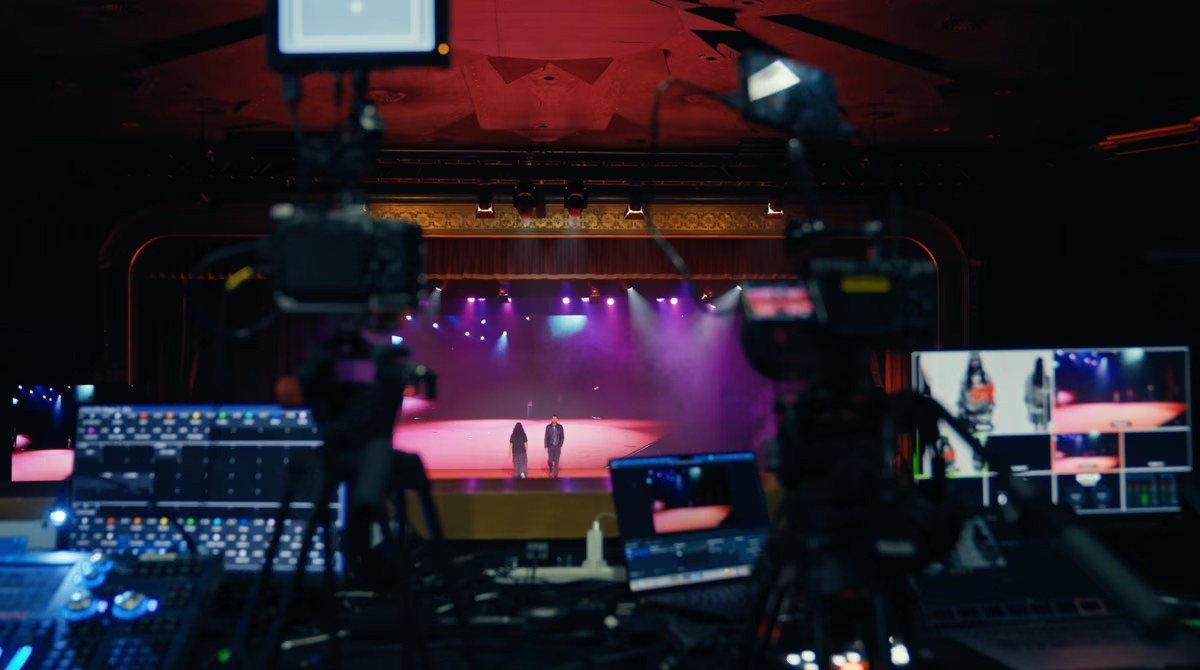
Yes, but a live podcast requires an additional production workflow, including live switching, platform management, reliable internet and real-time moderation.
Can remote guests join?
Yes. Their camera, microphone, lighting and internet connection should be tested before recording.
Should the questions be scripted?
The main themes and questions should be prepared, but overly scripted answers can make the conversation sound unnatural. The host should be able to ask follow-up questions.
Can one episode be turned into social media content?
Yes. A complete episode can generate vertical clips, trailers, quote videos, written excerpts and promotional images, provided these deliverables are included in the production plan.
Conclusion
Professional video podcast production combines editorial planning, technical production and content strategy.
The strongest programmes begin with a clear audience and subject, then build a repeatable format around appropriate cameras, individual microphones, controlled lighting and a suitable recording environment.
Businesses should also plan how each episode will be distributed. The complete programme may establish authority and provide depth, while shorter clips help attract new viewers and maintain regular communication across social platforms.
A production company should therefore do more than record the conversation. It should help translate the business objective into a practical format that can be produced consistently and used across multiple channels.
Planning a Business Video Podcast in Dubai?
GSP Media provides professional video podcast and interview production for businesses, executives and organisations in Dubai and across the UAE.
Our team can manage studio or on-location recording, multi-camera production, professional audio, lighting, set preparation, episode editing and short-form social media content.
Blog
Professional Event Live Streaming: How It Works
Corporate Event Photo & Video Company Dubai: How to Choose
What Should Be Included in a Corporate Event Photography and Video Quote?


Public vs Private Live Streaming for Corporate Events

Live Streaming vs Recording an Event: Which Should You Choose?

How to Maintain Consistency Across a Fashion Ecommerce Catalogue


AI Content vs Traditional Photography and Video: What Should Your Brand Use?

How to Prepare Product References for AI Content Production

How Many Product Images Does an Ecommerce Product Page Need?
