Ecommerce fashion photography needs to show a garment clearly, consistently and in a way that helps customers understand how it looks. On-model, mannequin and flat-lay photography can all achieve this, but they communicate different information and require different production workflows. The right choice depends on the product category, brand positioning, catalogue size, sales channel and content budget. Many fashion brands use more than one format: a clean catalogue method for consistency, supported by on-model or lifestyle images that communicate fit and identity. This guide compares the three main approaches and explains how fashion businesses in Dubai and across the UAE can plan an efficient ecommerce shoot.
The Short Answer
Choose on-model photography when fit, scale, movement and brand personality matter most. Choose mannequin photography when you want a three-dimensional garment shape without the visual presence of a model. Choose flat lay for simple garments, accessories, coordinated sets and an efficient top-down catalogue style. For many stores, the strongest product page combines a consistent main format with selected on-model images.
What You Will Learn
- What each photography format communicates
- Which garments work best in each method
- How styling, casting and retouching differ
- How the choice affects catalogue consistency
- When to combine formats
- What to include in a fashion ecommerce brief
Why the Photography Format Matters
Customers cannot touch fabric, try on a garment or inspect the construction online. Photography must replace part of that physical experience. A useful product page should answer practical questions:
- What is the shape and length?
- How does the item fit?
- How does the fabric drape or stretch?
- What details are present on the front, back and sides?
- How large is the item relative to a person?
- How accurate is the colour?
The photography method determines which of these questions can be answered most directly.
On-Model Fashion Photography
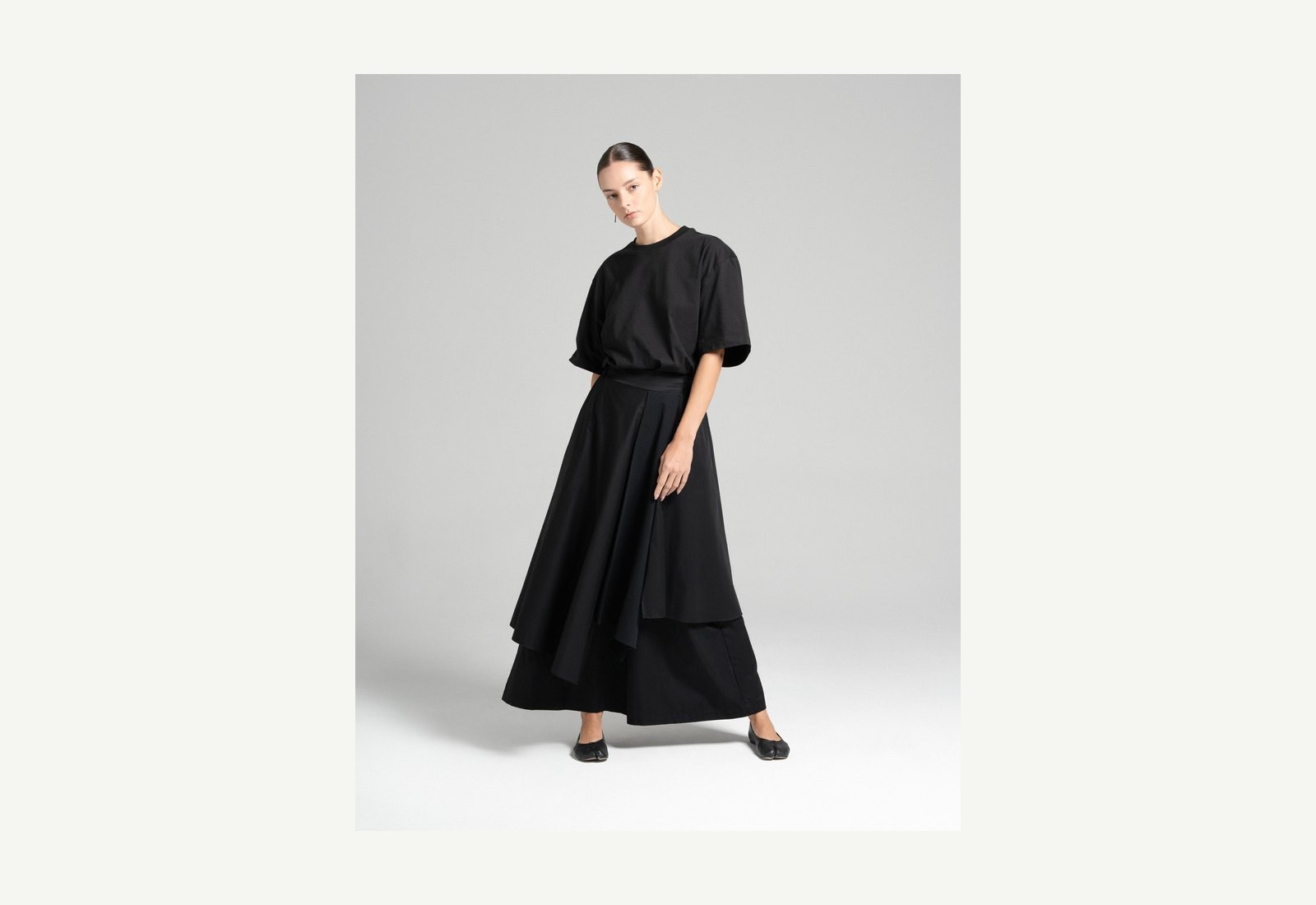
On-model photography shows the garment on a person. It is the clearest option for communicating fit, proportion, length and movement. It works especially well for:
- Dresses and abayas
- Suits and tailored garments
- Sportswear and activewear
- Layered looks
- Clothing where drape is a key feature
- Premium and brand-led collections
A model also creates an emotional connection. Expression, posture, casting and styling influence how customers perceive the brand. This can make on-model images valuable beyond the product page, including category banners, advertising and social media.
Advantages of On-Model Photography
- Shows fit and scale naturally
- Communicates movement and fabric behaviour
- Supports brand identity
- Creates versatile marketing assets
- Helps customers imagine wearing the product
Limitations of On-Model Photography
It requires casting, scheduling, hair and makeup, styling, changing space and more detailed production planning. Fit must be checked on the selected model before the shoot. A garment that is pinned heavily or does not match the model’s measurements can give customers an inaccurate impression. Model appearance should also remain consistent across a catalogue. Different poses, camera distances or styling decisions can make product comparison difficult.
Mannequin Photography
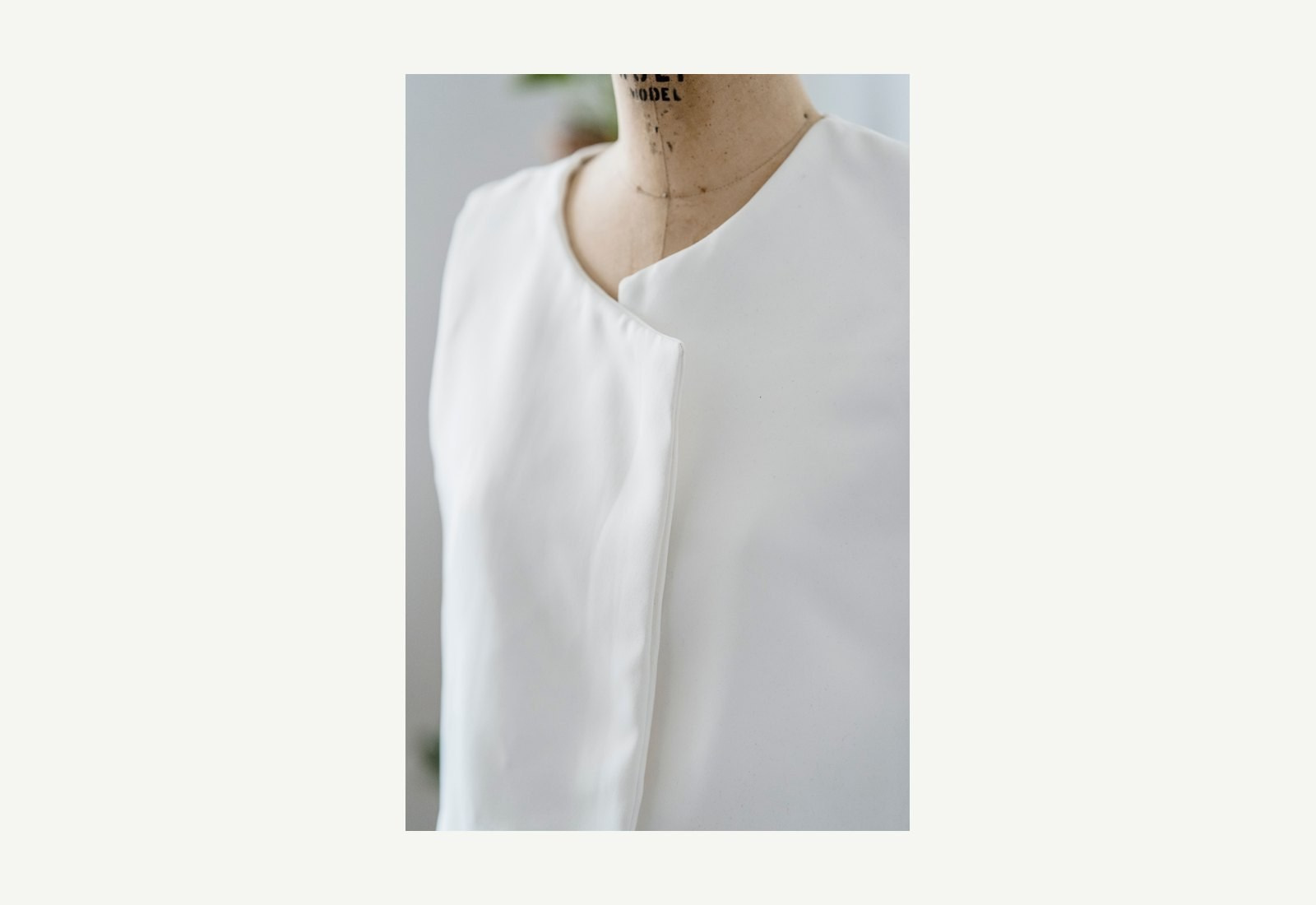
Mannequin photography gives clothing a three-dimensional shape without making a person part of the image. It is commonly used for clean ecommerce catalogues where the garment should remain the main subject. It suits:
- Shirts and blouses
- Jackets and structured garments
- Basic dresses
- Uniforms
- Products that need consistent front, back and side views
The mannequin must match the garment size and intended body shape. Styling clips and pins may be used carefully, but they should not change the real construction of the item.
Ghost Mannequin Photography
In a ghost mannequin image, the visible parts of the mannequin are removed during post-production. Additional photographs may be required to show the inside of the collar, neckline or waistband.
The final result gives the appearance of an invisible person wearing the garment. It can look clean and premium, but it is not a single automatic effect. Accurate alignment, consistent lighting and specialised compositing are required.
Advantages of Mannequin Photography
- Shows garment volume and structure
- Creates a consistent catalogue appearance
- Keeps attention on the product
- Does not require model scheduling
- Works well for repeatable front, back and detail views
Limitations of Mannequin Photography
It communicates less personality and does not show true movement. Poorly fitted garments can create unnatural shoulders, collapsed fabric or distorted proportions. Ghost mannequin editing also adds a specific post-production step.
Plan Your Ecommerce Fashion Shoot
Flat-Lay Fashion Photography
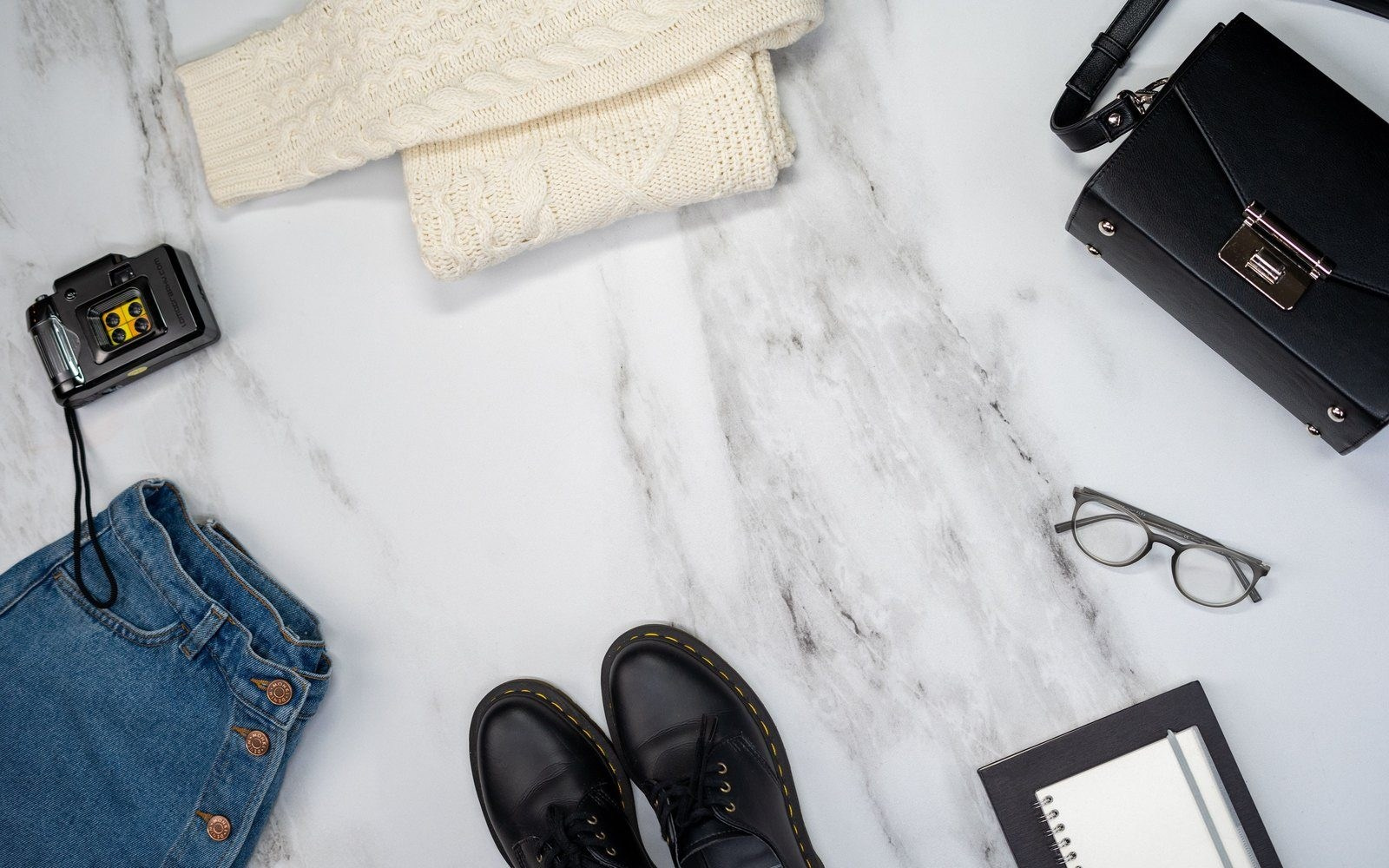
Flat-lay photography arranges clothing and accessories on a horizontal surface and photographs them from above.
It is effective for:
- T-shirts and simple tops
- Children’s clothing
- Scarves and accessories
- Coordinated outfits
- Small products and gift sets
- Social media compositions
Flat lay can be clean and catalogue-focused or styled with props. For ecommerce, the garment should still be shaped carefully so that sleeves, hems and important details are visible.
Advantages of Flat-Lay Photography
- Efficient for suitable products
- Creates a clear top-down view
- Works well for sets and accessories
- Does not require models or mannequins
- Can be adapted for editorial social content
Limitations of Flat-Lay Photography
It cannot show true fit, body scale or natural movement. Structured garments may look compressed, and long items require sufficient shooting height and floor space. Styling consistency is essential: small differences in sleeve position or fold depth become obvious when products appear together in a catalogue.
Model vs Mannequin vs Flat Lay
Use the following decision logic:
- Fit and movement are essential: choose on-model.
- Three-dimensional structure is essential but the product should stand alone: choose mannequin or ghost mannequin.
- The item is simple, small or part of a coordinated set: consider flat lay.
- The brand needs both catalogue clarity and emotional marketing: combine a consistent catalogue format with selected on-model images.
The product category should lead the decision. A structured blazer and a silk scarf should not be forced into the same presentation method simply for production convenience.
When to Combine Formats
A strong ecommerce listing often uses several image functions rather than repeating the same view. For example:
- Main on-model image
- Front and back mannequin views
- Close-up of fabric and construction
- Flat-lay image of included pieces
- Short movement video
Combining formats should be planned, not improvised. The lighting, background, crop and colour treatment need to feel like one visual system.
Catalogue Consistency
Consistency helps customers compare products and makes the store feel professional. Agree the rules before photographing a large collection:
- Camera height and distance
- Model position and pose
- Garment scale within the frame
- Background value
- Shadow style
- Front, back and side angles
- Crop and aspect ratio
- Colour and retouching standard
A representative test image should be approved before the full catalogue continues. This is especially important when multiple shooting days or teams are involved.
Prepare Garments Before the Shoot
Every item should arrive labelled, clean and complete. Steaming, lint removal and minor styling are part of the on-set workflow, but badly packed clothing consumes production time. Check:
- Correct size and colour
- Buttons, zips and fastenings
- Loose threads and damaged seams
- Matching belts and accessories
- Care labels and tags that should be hidden or shown
- Duplicate samples for high-priority garments
Provide a SKU list and the exact image sequence required for every product.
Model Casting and Fit
Model casting is both a brand and production decision. Consider audience, market, age range, proportions and how the collection should be represented. Confirm the model’s current measurements and test key garments where possible. Clothing samples are often produced in one size, and the model must fit that size without excessive alteration. For ecommerce, repeatable poses are usually more valuable than complex editorial movement. Campaign content can allow more variation, but the product must still remain understandable.
Styling and Art Direction
Ecommerce styling should be precise and truthful. The stylist manages fit, symmetry, folds, collars, cuffs, hemlines and accessories while preserving the actual design. Decide whether garments will be shown alone or as complete looks. If additional items appear, clarify whether they are sold separately. The imagery should not create confusion about what the customer receives.
Colour Accuracy and Retouching
Fashion customers make colour decisions from a screen, so consistent colour management matters. Lighting, camera settings, display calibration and post-production all influence the result. Retouching may remove lint, small temporary creases and background inconsistencies. It should not silently change the fit, fabric texture or construction. If a garment sample differs from the final product, the brand must explain exactly what can be corrected accurately.
Planning Photography and Video Together
Short fashion videos can show movement, fabric behaviour and multiple angles more clearly than still images alone. When photo and video are produced together, plan:
- Which looks require motion
- Horizontal and vertical framing
- Model actions and pacing
- Consistent lighting
- Changing schedule
- Audio or music requirements
A combined day can be efficient, but only if the schedule recognises that stills and motion require different performance and camera workflows.
What to Include in the Brief
- Product and SKU list
- Chosen format for each category
- Model requirements and sample sizes
- Reference images
- Required angles and details
- Marketplace or website specifications
- Aspect ratios and video requirements
- Retouching expectations
- Delivery schedule
Frequently Asked Questions
Which format is best for a new fashion ecommerce store?
Choose the most repeatable format that communicates your main product categories clearly. Add on-model images where fit and brand identity are important.
Is ghost mannequin photography the same as mannequin photography?
Ghost mannequin is a specialised version in which the mannequin is removed in post-production, often using additional interior garment photographs.
Can flat lay show the fit of clothing?
No. It shows shape, colour and details, but not how the garment sits or moves on a body.
Do all products need the same photography format?
No. Consistency matters, but different categories may require different methods. The visual rules should connect them into one catalogue.
Can model and catalogue images be produced on the same day?
Yes, when the shot list, changing order, lighting setups and crew are planned in advance.
Conclusion
On-model, mannequin and flat-lay photography are not competing styles; they solve different ecommerce problems. The best choice is the one that explains the product honestly, fits the brand and can be repeated consistently across the catalogue. GSP Media provides fashion photography and video production for ecommerce brands, designers and agencies in Dubai and across the UAE, including clean catalogue imagery, on-model production and campaign content.
Blog
How to Prepare Products for a Commercial Photoshoot

Corporate Podcast vs Video Interview: Which Format Is Right for Your Business?

How to Prepare a Corporate Event Photography and Video Brief

How to Prepare a Venue for Professional Live Streaming
How Multi-Camera Live Streaming Works
How Multi-Camera Video Podcast Production Works
How Many Cameras Does a Corporate Event Need?
How to Prepare a CEO or Executive for a Video Interview

Why Backup Internet Is Essential for Event Live Streaming

What Affects Corporate Event Photography and Video Costs?
Event Photography vs Videography: What Does Your Event Need?
Video Podcast Production in Dubai: Complete Business Guide
Professional Event Live Streaming: How It Works
Corporate Event Photo & Video Company Dubai: How to Choose